Yes, a heavy-duty horizontal wood grinder can easily shred wooden pallets with nails, staples, and small bolts—provided it is equipped with impact-resistant carbide hammer tips and a magnetic metal separation system. Unlike traditional knife chippers that shatter when hitting steel, horizontal grinders pulverize wood using blunt impact force, allowing nails to pass through the screen without damaging the rotor.
But the difference between a machine that runs for years on nailed pallets and one that breaks down weekly comes down to specific configuration choices, safety procedures, and an honest understanding of what the machine can and cannot handle. This guide covers all of it.
Many buyers confuse wood chippers with horizontal wood grinders. If you feed nailed pallets into a standard drum or disc chipper, the sharp steel knives will chip, dull, or break within minutes.
Here is why an industrial horizontal grinder (such as the EG 5320 electric model or DHG 4000 diesel model) is built for metal-contaminated wood waste:
Blunt Impact Force Instead of Slicing: Horizontal grinders use heavy swinging or fixed hammers tipped with tungsten carbide or H13/D2 hardened alloy steel. Instead of slicing the wood cleanly, they smash the pallet against an anvil, tearing the wood fibers apart while knocking nails loose.
Breakaway Torque Protection: Quality industrial grinders include hydraulic relief valves or shear-pin clutches. If an oversized piece of tramp metal (like a heavy steel bracket) enters the chamber, the feed roller automatically reverses to prevent catastrophic rotor damage.
Built-In Magnetic Separation: Once the pallet is shredded, a magnetic head pulley or overband cross-belt magnet on the discharge conveyor automatically pulls 95% to 99% of the loose nails and staples out of the finished wood chips.
A horizontal grinder excels at pallet processing because pallet material is dimensional, relatively uniform, and the nail content is manageable. However, there are limits:
Mixed C&D debris with rebar, wire, or large steel brackets: The conveyor feeds everything uniformly, meaning non-grindable items reach the rotor and cause damage or blockages. A horizontal grinder is not a sorting machine.
Pallets saturated with concrete or heavy chemical contamination: These require pre-cleaning or rejection, not just a stronger hammer.
Very low volume (under 100 pallets/day): The capital cost of a production-class grinder may not pencil out. For small operations, a used mid-size unit or a shared processing arrangement is often more sensible.
Being honest about these limitations is part of what separates a useful buyer’s guide from a sales pitch.
If your facility processes 500 to 5,000+ scrap pallets per day, do not buy a basic forestry grinder. Make sure your machine includes these four pallet-specific upgrades:
| Component | Recommended Specification | Why It Matters for Pallets |
| Hammer Tips | Recessed Tungsten Carbide Tips | Resists chipping when striking hardened pallet nails at high RPM. |
| Discharge Magnet | Permanent Magnetic Head Pulley + Overband Magnet | Removes nails so your wood chips meet clean mulch or boiler fuel standards. |
| Infeed Conveyor | Heavy-Duty Steel Slat or Drag Chain | Prevents broken pallet boards and protruding nails from jamming or tearing rubber belts. |
| Screen Size | 1.5″ to 3″ (40mm–75mm) Hexagonal Grates | Allows whole nails to exit smoothly without clogging the grinding chamber. |
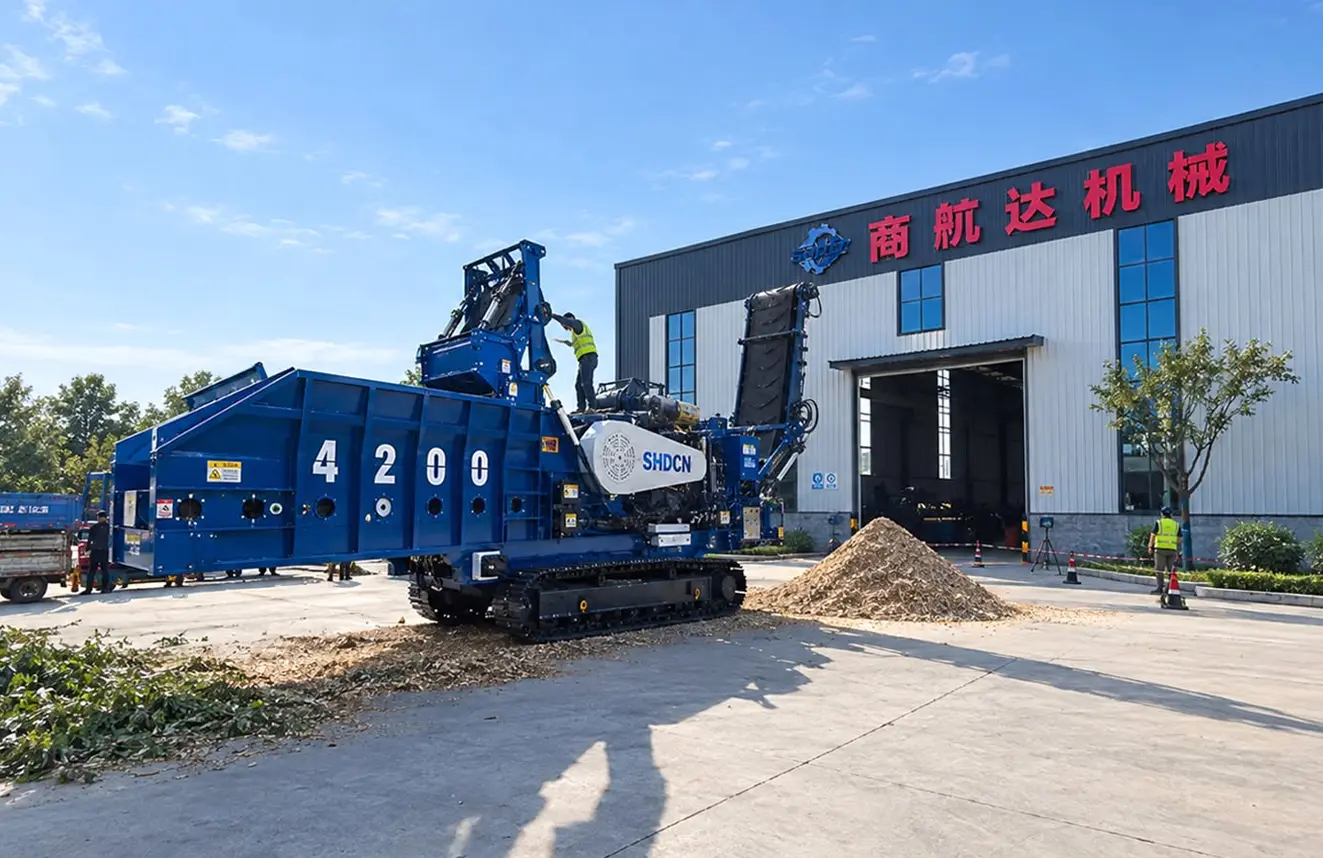
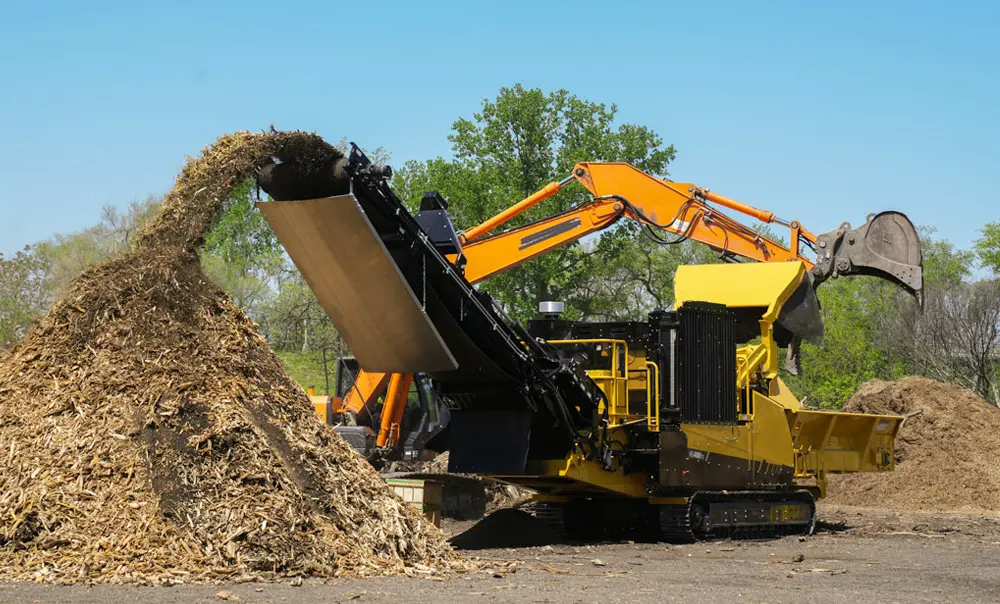
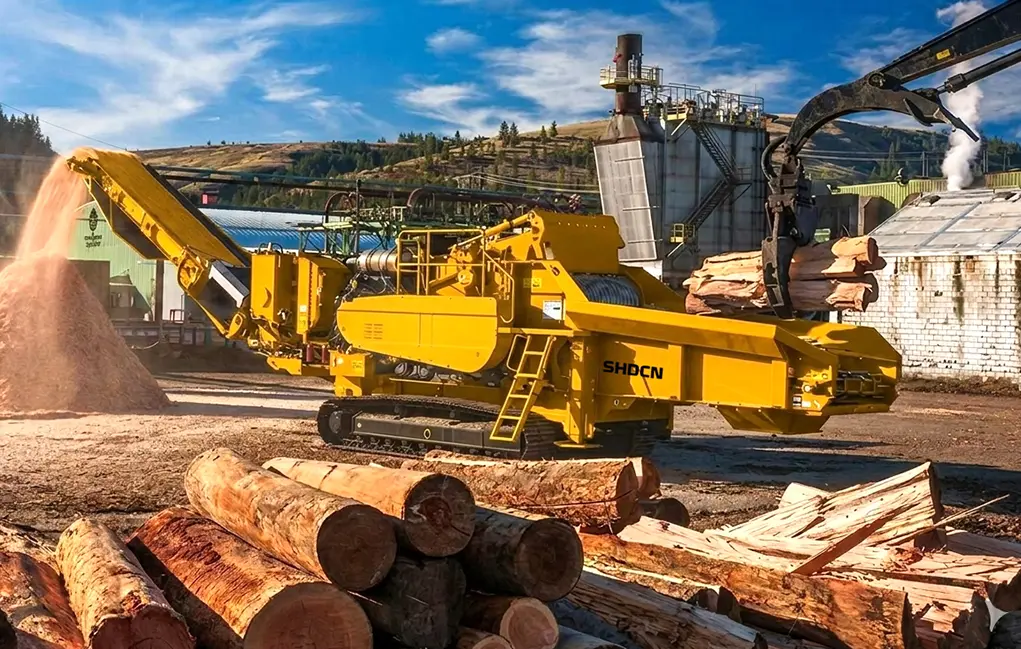
The SHDCN tracked diesel horizontal grinder is engineered for high-volume commercial tree shredding and biomass processing.
Because pallet recycling usually takes place inside a warehouse or at a fixed yard rather than in a forest, choosing the right power source can save you tens of thousands of dollars every year.
Electric Horizontal Grinders (Best for Fixed Yards)
Models to Consider: EG 2110, EG 2360, EG 4320, and EG 5320.
Lower Operating Cost: Industrial electricity costs roughly 50% to 65% less per ton than running a high-horsepower diesel engine.
Quieter & Zero Emissions: Ideal for indoor facilities or yards located near industrial parks with strict noise and exhaust regulations.
Lower Maintenance: No engine oil changes, fuel filters, or DPF/DEF emissions troubleshooting.
Diesel Horizontal Grinders (Best for Mobile Contractors)
Models to Consider: DHG 4000 and HG4000TX.
No Grid Power Needed: Essential if your yard lacks 3-phase high-voltage power or if you haul the grinder between multiple construction and demolition sites.
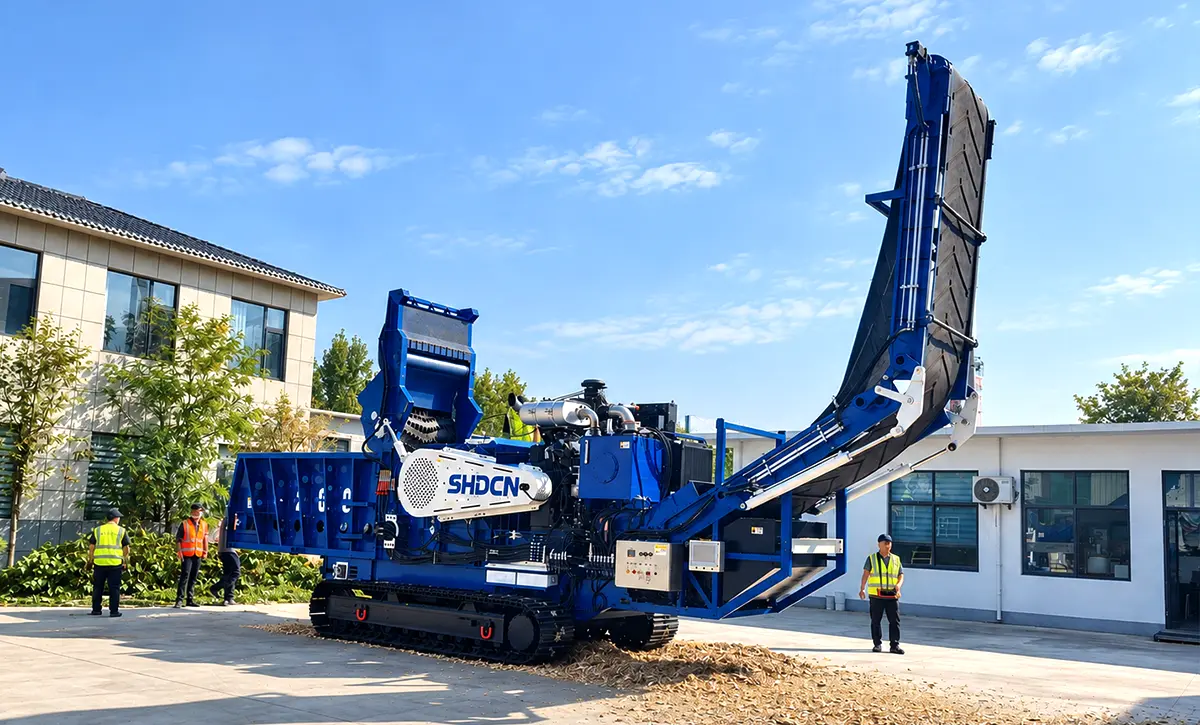
Pallet recycling facilities face specific regulatory scrutiny that general wood grinding operations may not. In the United States, OSHA has cited pallet recycling companies for serious violations including inadequate machine guarding, missing lockout/tagout procedures, and failure to provide personal protective equipment. If you are setting up or expanding a pallet grinding line, ensure the following:
Lockout/Tagout (LOTO): The grinder must have a documented energy control procedure for hammer tip changes, screen swaps, and magnet cleaning. Rotor access without LOTO is a leading cause of amputations in wood processing.
Dust Management: Pallet grinding generates fine wood dust. NFPA 664 applies to facilities processing wood that creates dust occupying more than 5,000 square feet, and requires hazard assessment for deflagrable dust (particles under 420 microns). Even if your grinder produces primarily coarse chips, the surrounding conveyors and screening equipment can generate fines.
Metal Detection vs. Magnetic Separation: These are complementary, not interchangeable. A metal detection system (MDS) stops the feed before damage occurs; a discharge magnet removes nails after grinding. Your machine should have both. Quality MDS systems engage within milliseconds when the rotor contacts metal, reversing the infeed to allow removal.
Industry feedback consistently identifies pallet processing as one of the most profitable applications for a horizontal grinder. Some customers recover their machine investment in under 18 months on pallet processing alone. The key driver is not just the grinder itself—it’s the avoided disposal cost and the value of the output.
Consider the math for a mid-sized operation processing 2,000 pallets per day:
| Cost/Revenue Factor | Approximate Value (US Market Reference) |
| Landfill tipping fee avoided | $30–$60 per ton |
| Finished mulch/biomass value | $15–$40 per ton (depending on local market) |
| Daily output (EG 4320 class) | 8–20 tons per hour |
Even at conservative throughput, the combined savings and revenue can justify the machine within 18–24 months of consistent operation. This is why pallet recyclers who invest in properly equipped horizontal grinders often view the machine as a production asset rather than a cost center.
Once magnetically separated, clean pallet wood (typically dry hardwood or pine with 10%–15% moisture) serves as a high-value feedstock for several applications:
Landscape Mulch & Animal Bedding: Dry wood absorbs iron-oxide colorants effectively for premium colored mulch, while finer screens (10mm–20mm) produce absorbent bedding for livestock.
Biomass Fuel & Pellets: Low moisture content bypasses rotary drying, allowing direct feeding into waste wood pellet production lines.
Molded Pallets & Blocks: Shredded waste can be pressed with resin into zero-waste compressed wood pallets or blocks.
Essential Maintenance & Operation
Pre-sort Large Tramp Metal: Remove heavy steel bolts, straps, or forklift forks prior to feeding.
Service Hammer Tips & Magnets: Inspect and rotate reversible carbide hammer tips every 40–50 operating hours, and clean magnetic head pulleys daily.
Do I need to remove nails manually?
No, industrial grinders process whole pallets directly, and magnetic conveyors extract 95%–99% of the metal automatically.
What screen size is recommended?
Use 2″–3″ (50mm–75mm) for rough mulch or boiler fuel, and 0.5″–1″ (12mm–25mm) or secondary hammermills for animal bedding or pellet lines.
What is the hourly output?
Mid-to-large electric models (such as the EG 4320 or EG 5320) process roughly 8 to 20 tons (400 to 1,000+ standard pallets) per hour.
What happens if a large bolt or bracket enters the grinding chamber?
Quality industrial grinders include breakaway protection—hydraulic relief valves or shear-pin clutches. If an oversized piece of tramp metal enters, the feed roller reverses automatically to prevent catastrophic rotor damage. This is distinct from the metal detection system, which senses smaller metal before it reaches the rotor.
How often should I inspect the discharge magnet?
Daily. The magnetic head pulley and overband magnet collect nails and staples continuously. If the magnet surface is covered with metal, separation efficiency drops sharply. Clean it at the start of each shift and inspect the belt for embedded metal that may have pierced through.
Can I grind pallets with a tub grinder instead?
Yes, but it is less efficient. Tub grinders feed by gravity and are better suited to bulky, irregular material like stumps. For dimensional material like pallets, a horizontal grinder’s controlled feed and enclosed chamber provide faster throughput, better output consistency, and safer operation.
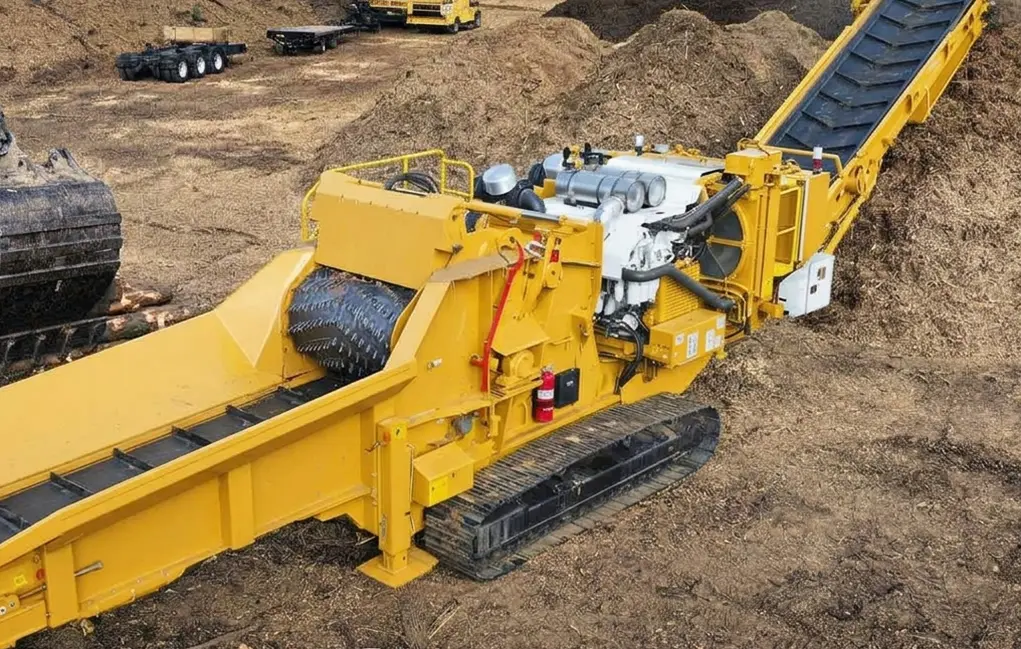
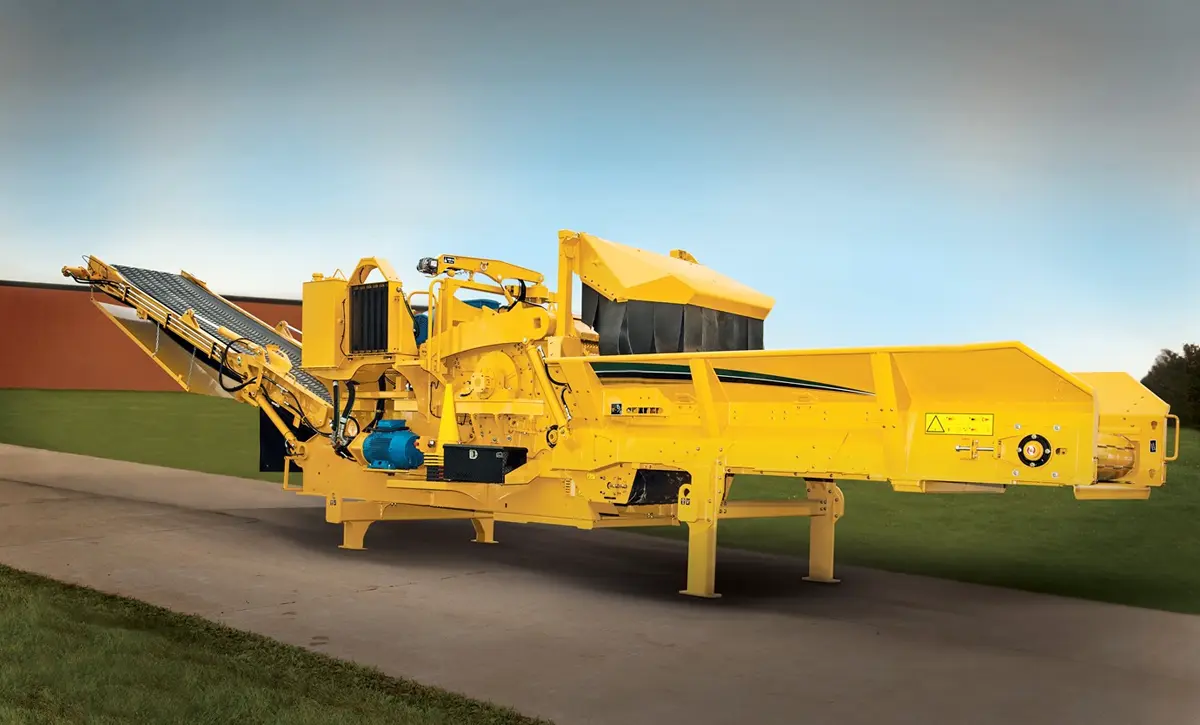
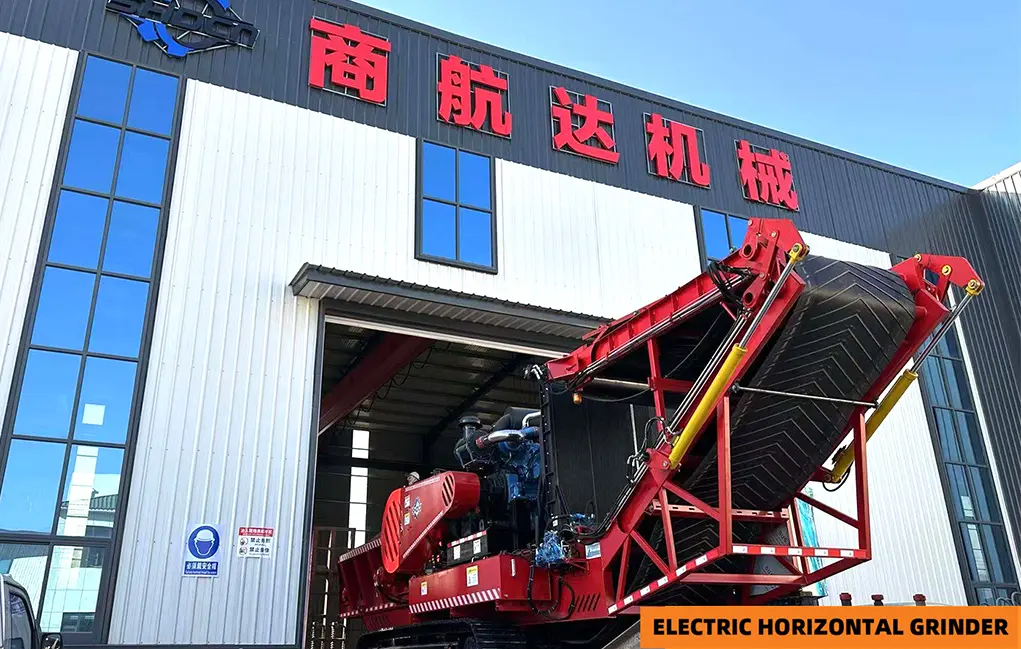
A close-up view of the horizontal grinder’s heavy-duty feed roller and discharge conveyor, designed for continuous high-volume wood processing.
For tailored machinery recommendations based on your daily volume, contact our engineering team for a configuration-specific quote.
FB Page Name : https://www.facebook.com/shdcn
Email: [email protected]
WhatsApp: +86-15315577225