Tree Grinder Machine, Whole Tree Chipper & Industrial Tree Shredder
If you are in land clearing, forestry, or municipal waste management, choosing the right grinding equipment is a major capital decision. When it comes to processing tree stumps, two machines dominate the conversation: the tub grinder and the horizontal grinder.
While both machines can reduce massive wooden debris into useful mulch or biomass, their designs dictate completely different operating profiles. This guide breaks down the engineering differences, processing efficiency, safety, and cost of ownership to help you decide which machine is truly better for your specific stump grinding operation.
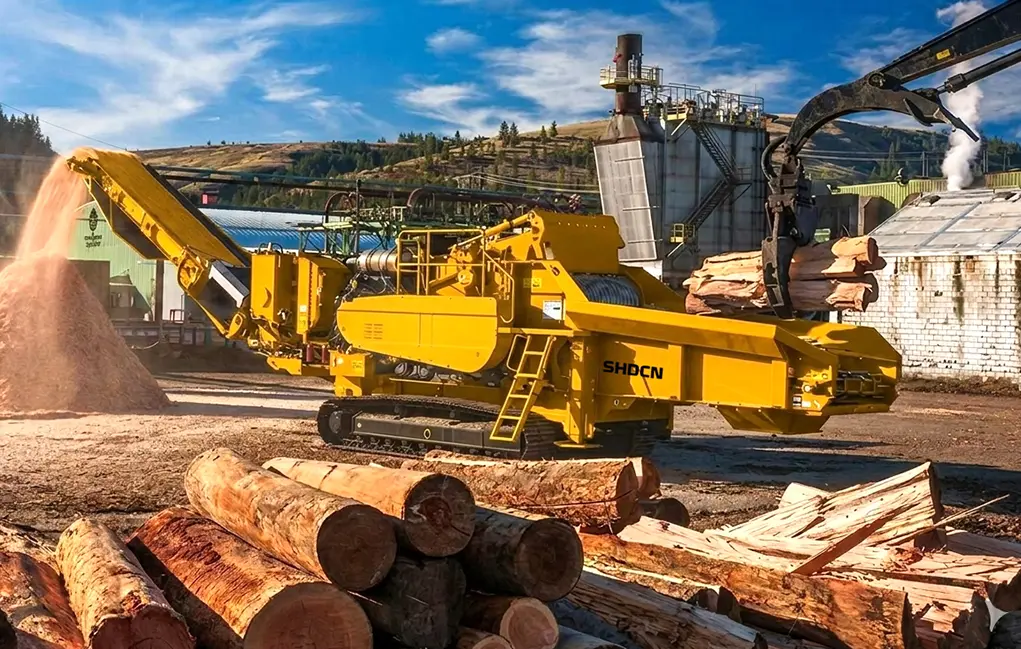
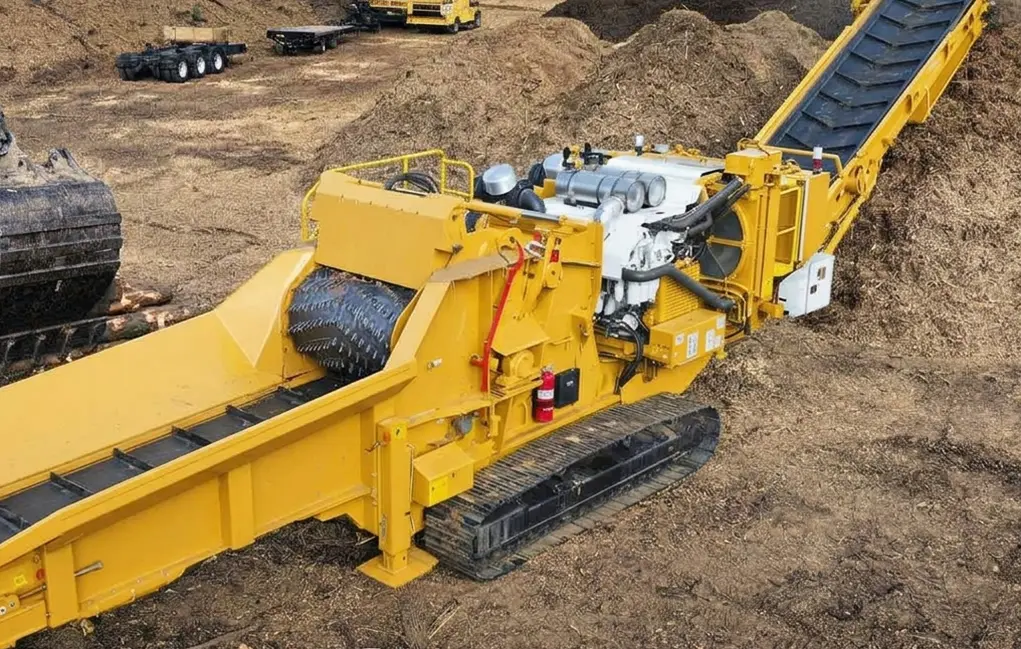
A heavy-duty tracked horizontal grinder efficiently processing large logs. Unlike tub grinders, the horizontal feed system easily handles long materials and whole trees.
The Fundamental Difference: Tub vs. Horizontal
Before comparing how they handle stumps, you must understand how each machine feeds material into the grinding rotor.
How a Tub Grinder Works
A tub grinder features a large, circular, open-top “tub” (or bowl). Inside the tub, a spinning rotor sits at the bottom. Material is loaded into the tub from above using an excavator or a wheel loader. Gravity pushes the material down into the spinning hammers.
How a Horizontal Grinder Works
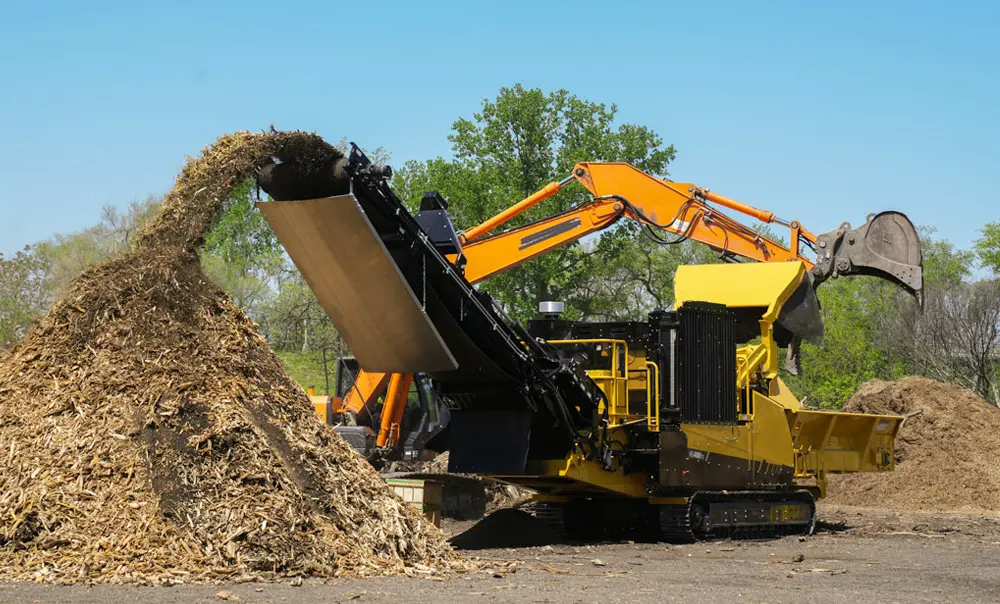
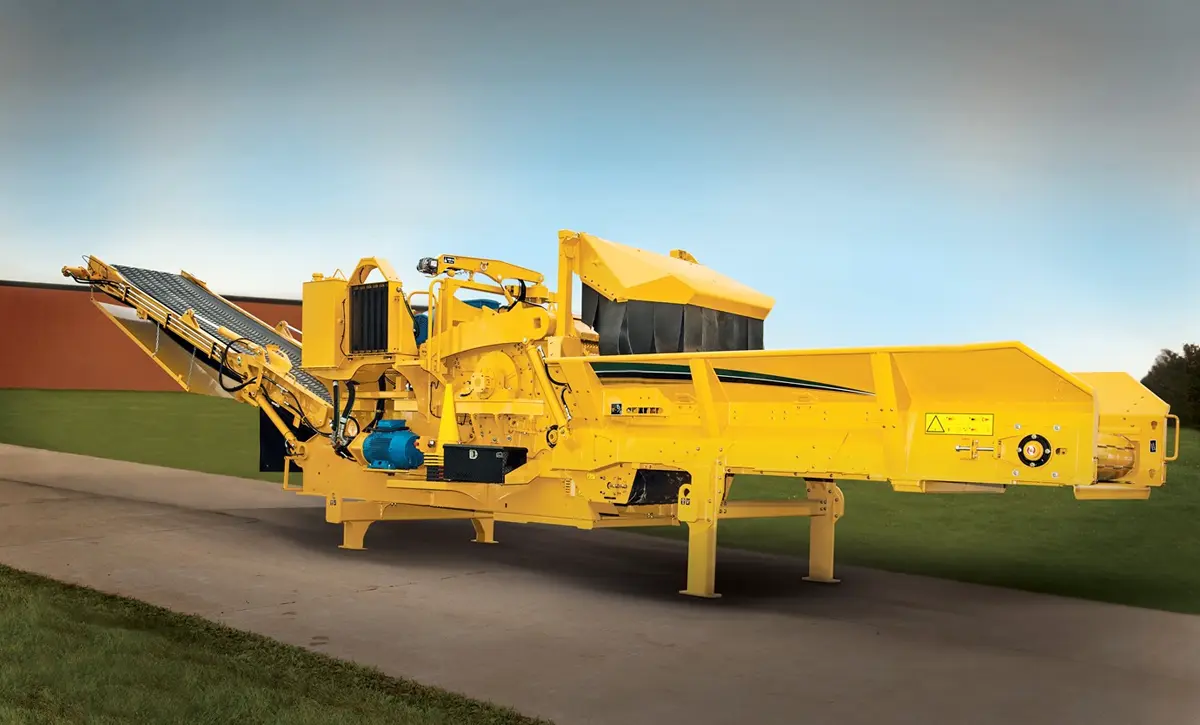
A horizontal grinder utilizes a long, flat feed table or conveyor. Material is pushed horizontally into a rotating drum or rotor by a heavy-duty feed roller or chain. The processed material then exits via an upward or side-discharge conveyor.
Processing Tree Stumps: The Core Comparison
Tree stumps are among the most difficult materials to process. They are heavy, often contain dirt, rocks, and embedded metal, and have irregular shapes. Here is how each machine handles them:
1. Feeding Mechanism and Efficiency
-
Tub Grinder: The open-top design allows loaders to dump entire root balls and large stump chunks directly into the tub. However, because the tub is open, there is a high risk of material “bouncing” out during grinding. Operators often have to use the loader to push the material back down into the rotor, which is inefficient and time-consuming.
-
Horizontal Grinder: The enclosed feed table and powerful feed roller force the stump into the rotor. For irregular, bulky stumps, horizontal grinders are generally superior. The feed roller grabs the material and pulls it in steadily, ensuring a continuous, smooth grinding process without material flying back out.
2. Handling Contaminants (Dirt and Rocks)
-
Tub Grinders: Stumps are notorious for holding dirt and rocks in their root systems. In a tub grinder, heavy debris drops directly into the rotor housing. This can severely damage hammers and screens, leading to high maintenance costs.
-
Horizontal Grinders: Because the material is fed horizontally, the feed roller acts as a barrier. Much of the loose dirt and small rocks fall away before the wood enters the grinding chamber. Furthermore, most horizontal grinders allow you to reverse the feed roller if it jams, preventing catastrophic rotor damage.
3. Output Quality and Consistency
-
Tub Grinders: Because gravity feeds the material, the output can be inconsistent if the operator doesn’t manage the feed rate carefully. A tub grinder is more likely to produce long, stringy pieces from fibrous stumps.
-
Horizontal Grinders: The forced feeding mechanism results in a much more uniform end product. The material is consistently pushed against the screens, ensuring the mulch is the exact size you require.
Operational and Safety Considerations
Safety and Flyback
This is a critical deciding factor.
-
Tub Grinders: The open tub design creates a significant hazard. When the rotor hits a large stump, debris and wood chunks can be violently ejected straight up and out of the tub. This requires a very large safety exclusion zone around the machine.
-
Horizontal Grinders: The fully enclosed grinding chamber practically eliminates flyback. This makes horizontal grinders much safer to operate, especially in municipal areas or where space is tight.
Mobility and Transport
-
Tub Grinders: Tub grinders are generally heavier and have a wider transport profile. Moving them between job sites often requires special permits and wide-load escorts.
-
Horizontal Grinders: Many horizontal grinders are designed with tighter transport dimensions. Towable and tracked models can be moved relatively easily, making them ideal for contractors working across multiple land-clearing sites.
Cost of Ownership: Purchase Price vs. Maintenance
When budgeting for stump processing, the initial sticker price is only half the story.
-
Initial Investment: Generally, a standard tub grinder is slightly cheaper to buy upfront than a comparable horizontal grinder of the same horsepower.
-
Maintenance Costs: This is where the horizontal grinder wins. Because it handles dirty, rocky stumps much better, the wear parts (hammers, tips, and screens) last longer. The ability to control the feed rate extends the life of the rotor. Tub grinders, grinding dirty stumps by gravity, tend to chew through wear parts at a much faster rate.
Real-World Applications: Which One Should You Buy?
Choose a TUB GRINDER if:
-
You are processing clean wood waste (like pallets, clean logs, or construction wood).
-
You have massive volume and a dedicated site where transport isn’t a daily issue.
-
You have a large excavator with a long reach to manage the open tub safely.
-
You need to grind large amounts of yard waste or leaves quickly.
Choose a HORIZONTAL GRINDER if:
-
Your primary focus is tree stumps, root balls, and land clearing debris.
-
You need a machine that can handle dirty wood with rocks and metal embedded in it.
-
You value safety and need to operate in tighter spaces without massive safety zones.
-
You need a consistent, uniform end product for biomass or colored mulch.
-
You are a contractor who needs to move the machine frequently between job sites.
Comparing Horizontal Grinders from Global Markets
If you have determined that a horizontal grinder is the right tool for your stump grinding operations, you will likely be comparing equipment from North America, Europe, and Asia.
-
European and American Brands (like Morbark or CBI) offer proven reliability but come with a high premium. A used unit with thousands of hours can still cost well over $100,000, and replacement parts are expensive.
-
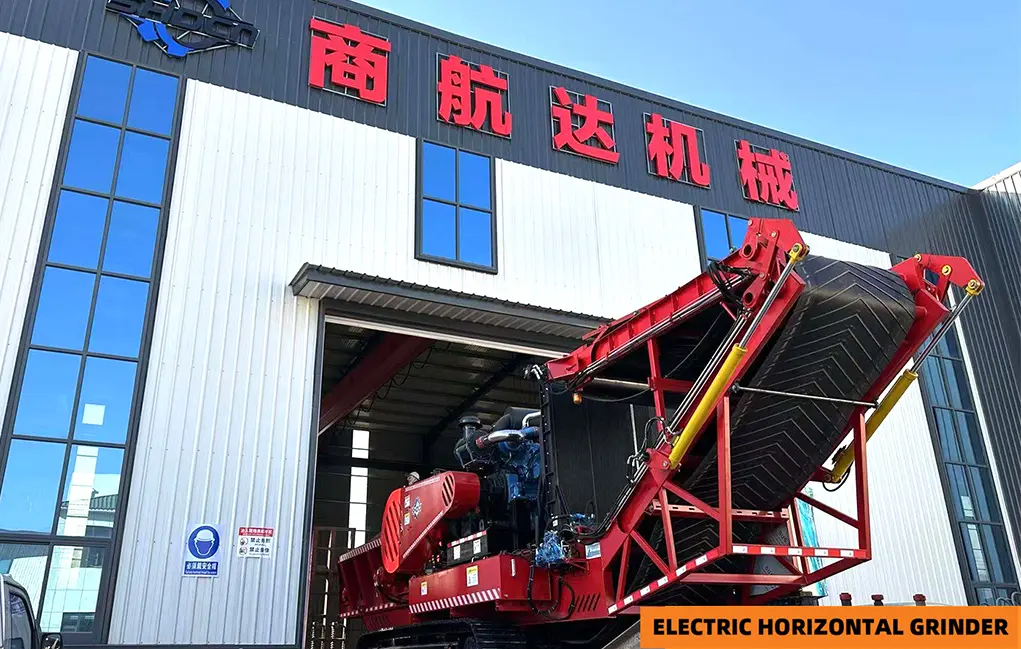
Asian Manufacturers have made significant strides. Today, buying a factory-direct horizontal grinder (especially electric or heavy-duty tracked diesel models) can save buyers 40% to 60%. Modern Chinese factories use globally sourced components (such as Cummins engines and European hydraulic pumps) and H13 steel wear parts, making them highly competitive for commercial stump grinding.
Frequently Asked Questions (FAQ)
Can a horizontal grinder handle whole tree stumps?
Yes, heavy-duty horizontal grinders are specifically designed for this. Models with large feed openings and powerful hydraulic feed rollers can easily pull in whole stumps and root balls.
Why are tub grinders not recommended for dirty stumps?
Tub grinders rely on gravity, dropping the stump directly into the rotor. If the stump is full of dirt and rocks, these contaminants cause severe, immediate wear to the hammers and screens. Horizontal grinders offer better control over contaminants.
Which machine is better for making colored mulch?
Horizontal grinders are generally preferred for colored mulch production. Their forced feeding and consistent rotor speed produce a highly uniform particle size, which takes dye much more evenly than the variable output of a tub grinder.
Is a tub grinder more dangerous than a horizontal grinder?
Yes, generally speaking. The open-top design of a tub grinder allows for more material flyback and requires a larger safety zone. Horizontal grinders enclose the grinding chamber, making them safer for the operator and surrounding environment.
What is the required horsepower for grinding stumps?
For commercial stump grinding, you typically need a machine with at least 400 to 600 horsepower. Smaller machines may struggle to process large, dense root balls efficiently.
Conclusion
While tub grinders have their place in high-volume, clean wood processing, the horizontal grinder is unequivocally the better choice for tree stumps. Its forced feeding system, superior handling of contaminants, enhanced safety profile, and ability to produce a uniform end product make it the industry standard for land clearing and stump disposal.
Looking for cost-effective horizontal grinder solutions for your land clearing business? Contact our engineering team today for equipment specifications and a full landed-cost estimate.