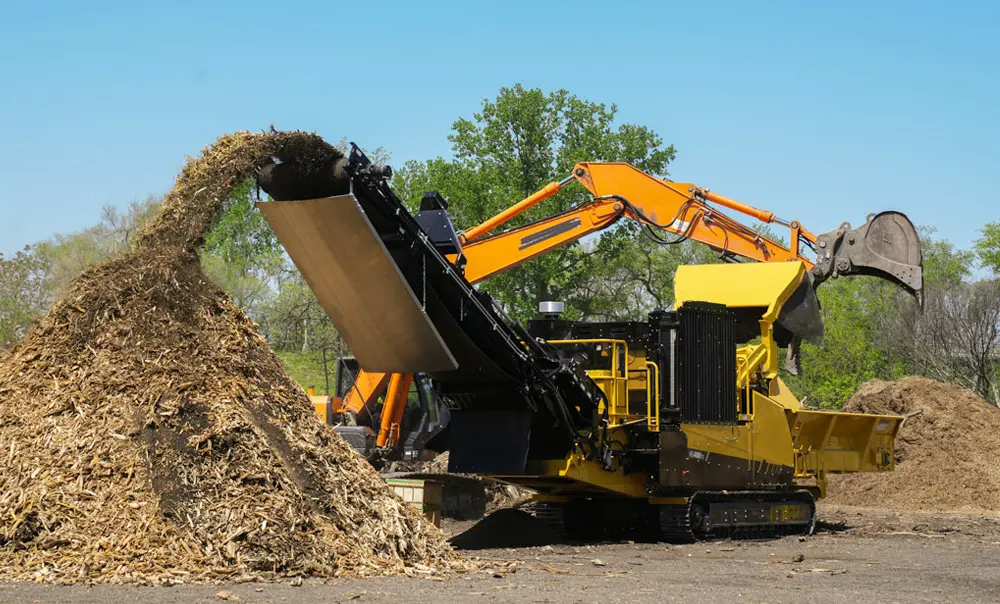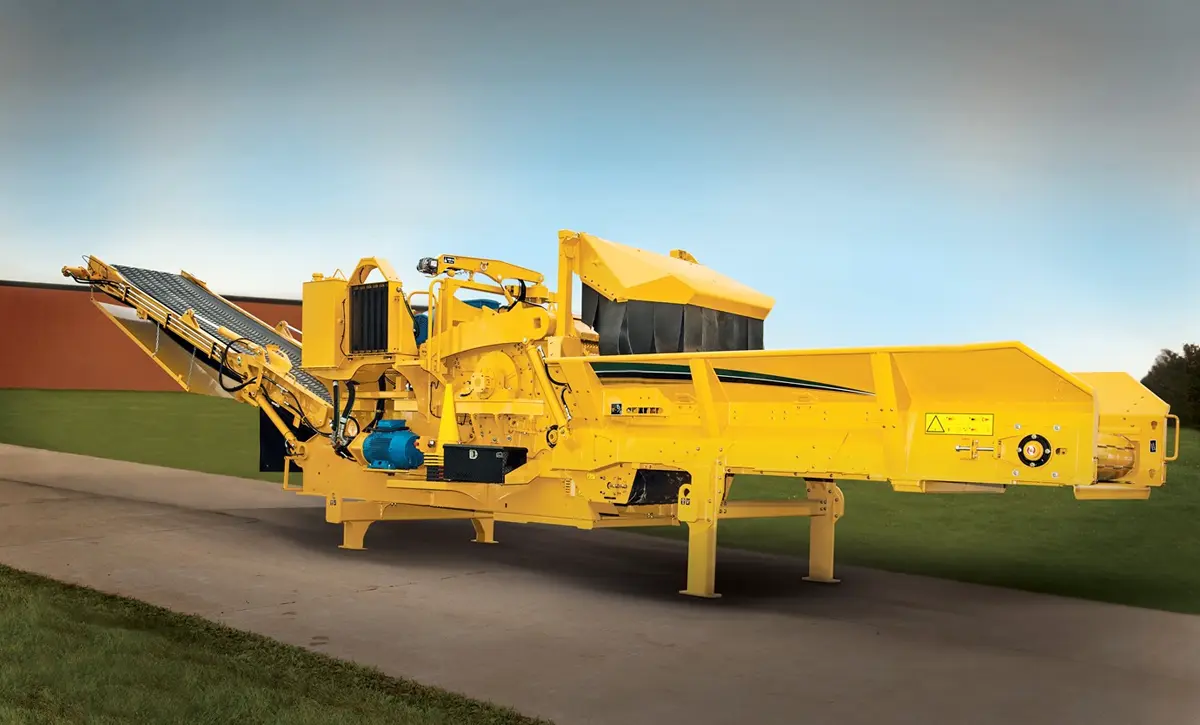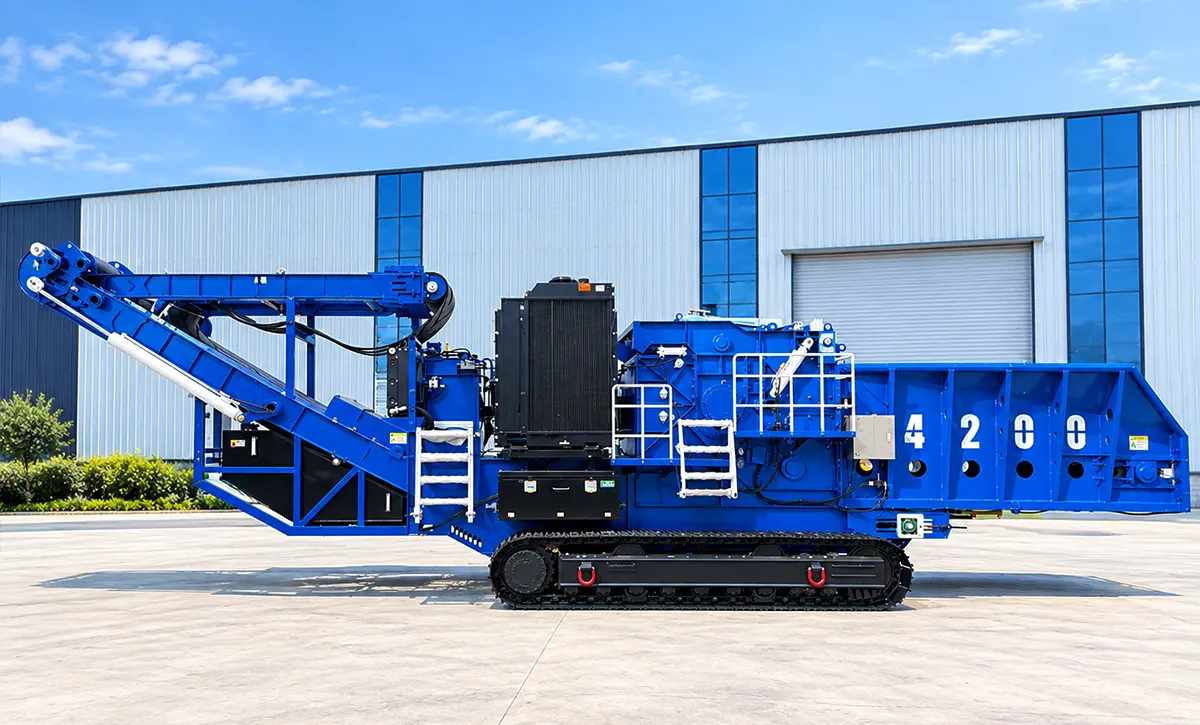
Searching “horizontal grinder for sale” returns hundreds of listings, and almost all of them look similar in a browser tab: a model number, an hour reading, a price, and a few photos. The gap between a good purchase and an expensive mistake is almost never visible at that level. It comes down to what the machine was fed, how many of its hours were actually productive, what the wear parts tell you about its history, and whether the transaction terms match the risk you are taking. This article is written for the buyer who has already decided a horizontal grinder fits the operation and now needs a disciplined way to evaluate specific machines on the market—new or used—before money changes hands.
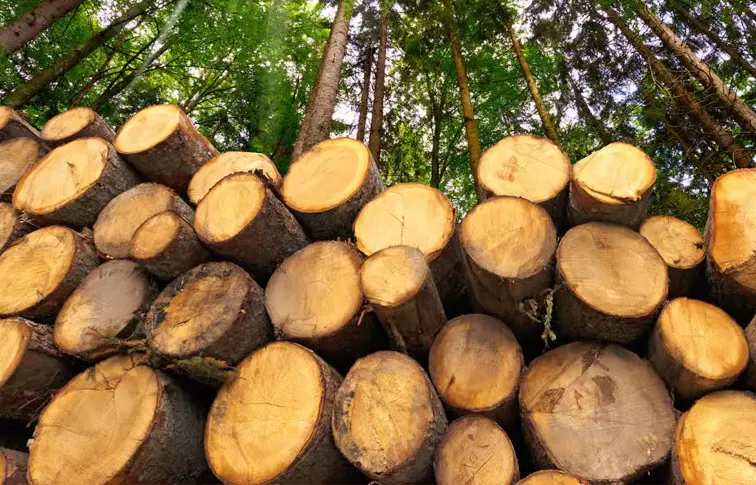
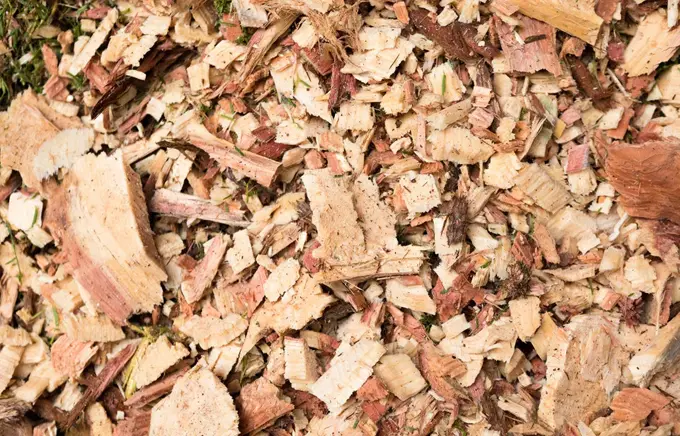
The single most common cause of a poor horizontal grinder purchase is shopping before the material specification is fixed. A machine that performs beautifully on clean pallets can struggle on stringy green waste; a unit sized for sawmill offcuts will be underpowered on land-clearing slash. The listing cannot tell you whether a machine fits—only your material can.
The practical rule is to define three things in writing before opening a single listing: the material mix by approximate percentage, the required output specification (mulch grade, biomass fuel chip size, or boiler feed consistency), and the realistic weekly tonnage the machine must sustain. A horizontal grinder feeds material in a straight line along a conveyor or chain into a rotor or hammermill, and its throughput depends heavily on feed consistency and screen configuration—not just horsepower. Long material such as branches and tree trunks is where horizontal grinders outperform tub grinders, because the controlled feed handles length without the pre-cutting a tub design often requires.
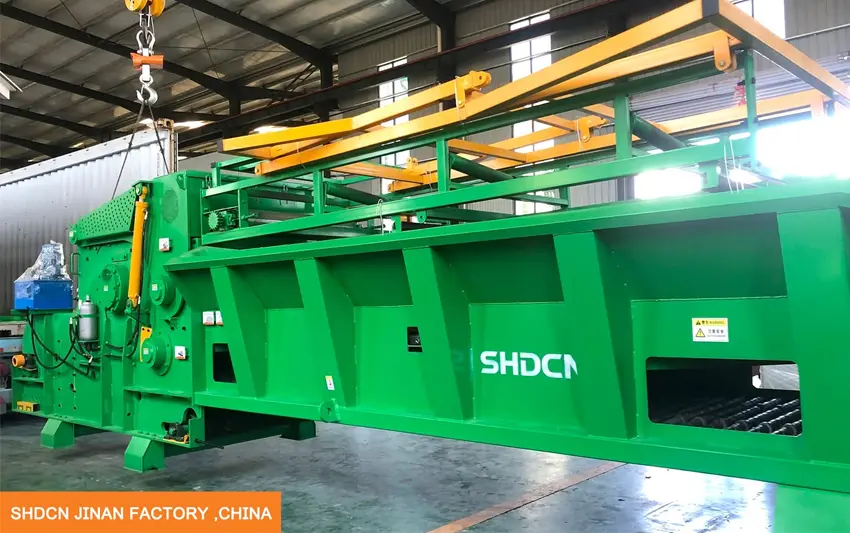
This is also where a manufacturer’s product line becomes useful as a reference framework. Industrial horizontal grinder platforms are commonly built around different cutting envelopes and power configurations—for example, electric horizontal grinder systems configured with soft-start motors that require no special foundation, centralized lubrication, and a choice of chipper drum or rotor setups to produce output from fine micro-chip to standard chip sizes. Knowing the available configurations helps the buyer ask better questions of any seller: Which drum or rotor is installed? What screen set is included? What output specification was this specific machine configured to hit? Those questions surface more useful information than horsepower alone.
Many buyers searching “horizontal grinder for sale” are actually making a comparison they have not fully resolved. The two architectures are not interchangeable, and the used market reflects that difference in pricing and availability.
A horizontal grinder is a production machine for clean, sorted, uniform feedstock. It force-feeds material into the grinding chamber at a controlled rate, which delivers higher throughput on consistent material and a more uniform end product—the reason it is the default choice for mulch manufacturing, biomass fuel, and sawmill waste. A well-fed horizontal grinder running clean wood can produce 50 to 150+ tons per hour depending on size class.
A tub grinder feeds by gravity from a rotating tub and accepts irregular, oversized, and contaminated loads—stumps, root balls, brush mixed with dirt—without pre-sorting. The trade-off is lower throughput on clean material, less consistent output size, and higher hammer wear when grit is present.
For the buyer, the implication is straightforward. If the material is sorted, clean, and uniform, a horizontal grinder is the right search. If the material is mixed, dirty, and unpredictable off a land-clearing or storm-cleanup site, a tub grinder or a two-stage setup may be the more realistic purchase, and shopping exclusively for a horizontal grinder will produce either an oversized machine or a maintenance-heavy one. Buyers who are genuinely on the boundary between the two should evaluate both architectures before committing to a listing category.
The used horizontal grinder market is deep, and the price spread between machines of similar model and vintage is large enough that hours alone explain very little of it. A practical framework for reading hour readings on horizontal grinders looks like this:
0–2,000 hours: low for a grinder; hammers and tips may have been replaced two to four times; machine typically in excellent shape, commanding roughly 70–85% of new price.
2,000–5,000 hours: mill bearing inspection needed, screen cradle wear likely, engine approaching first major service; typically 45–65% of new price.
5,000+ hours: engine overhaul likely needed or already performed, mill may need rebuild, hydraulic system wear present; typically 20–45% of new price.
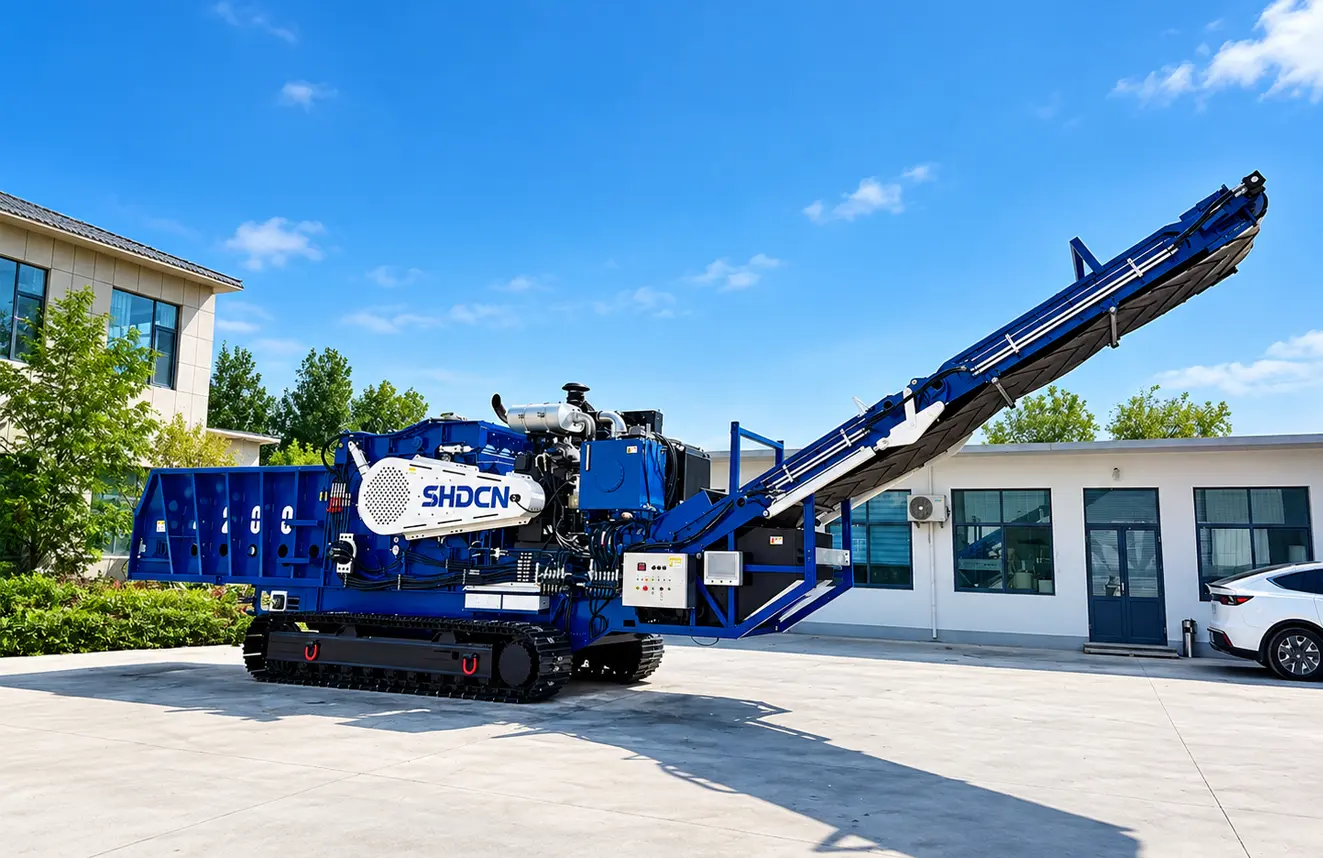
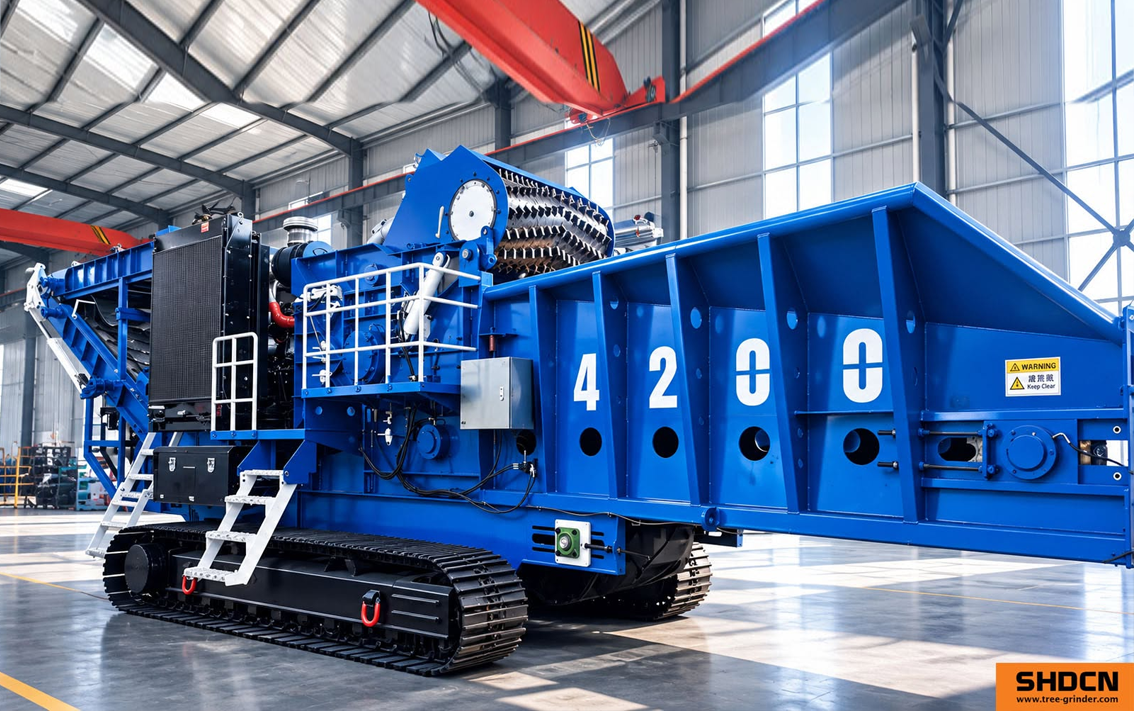
Manufactured by SHDCN, this heavy-duty diesel horizontal grinder is ready for deployment to commercial land clearing sites.
What these bands do not capture is context. A machine with 5,000 hours processing clean wood can be in better condition than one with 3,000 hours that was fed dirt-contaminated demolition debris. Maintenance records matter more than the number itself: a 6,000-hour machine with complete service history is worth more than a 3,000-hour machine with no records. Idle time percentage, climate of operation, and the material the machine was actually fed all change the real wear picture.
For the buyer, this means the hour meter is a screening tool, not a pricing tool. Use it to decide which listings deserve a serious inspection, then let the inspection set the price.
The used horizontal grinder market is not brand-neutral. Three American manufacturers have historically dominated the category—Bandit, Morbark, and CBI—and each builds machines with different feed systems and material strengths, which in turn affects used pricing and parts availability.
Bandit units are widely recognized for versatility across land clearing, construction and demolition debris, pallets, and biomass, with a broad dealer network that makes parts and service comparatively easy to source; used pricing has historically ranged from roughly $75,000 to $600,000. Morbark machines are built around a feed wheel and chain system that aggressively pulls irregular material such as stumps and root balls into the hammermill, and they hold resale value well; used pricing has run roughly $50,000 to $700,000. CBI builds toward the highest throughput end of the category, with force-feed chain systems and horsepower options above 1,000, and used pricing reflects that positioning at roughly $200,000 to $900,000.
None of these brands is universally “best.” The buying implication is that brand determines the parts and service ecosystem you are entering, and that ecosystem is part of the total cost of the machine. A brand with strong local dealer coverage reduces downtime risk; a brand with thinner coverage in your region may require carrying more spare parts or accepting longer lead times. Buyers comparing a specific listing should price the machine against its brand’s realistic support footprint in their area, not just its condition.
Configuration matters similarly. The installed drum or rotor type, the included screen set, the feed system design, and whether the unit is track-mounted or trailer-mounted all change both what the machine can produce and what it is worth. A machine sold with a single screen set and worn hammers is not the same purchase as one sold with multiple screens and recently replaced wear parts, even at the same asking price.
The inspection is where a horizontal grinder purchase is won or lost. A visual walkaround is not sufficient; horizontal grinders are the hardest-working machines in the material-processing lineup and they consume wear parts faster than other equipment types. The inspection should follow a fixed sequence rather than starting with a demonstration.
Before starting the machine, verify the hour meter reading against maintenance records, check for a CE mark or equivalent compliance labeling where applicable, and inspect structural condition: frame cracks, repaired welds, sheet metal condition, and signs of previous impact damage. On used equipment listings, inspection reports commonly flag non-functional warning lights, damaged displays, and engine codes that the seller has not resolved—these are negotiation items, not necessarily deal-breakers.
During a running demonstration, listen for abnormal noise from the mill and bearings, watch the feed system for hesitation or slipping, and verify that the discharge conveyor and hydraulic functions operate through their full range. Request a running video if an in-person inspection is not possible, and treat a seller who cannot provide one as a higher-risk counterparty.
On the wear components, inspect hammers and tips for remaining life, check screens for blinding, holes, and correct tensioning, and examine the screen cradle and mill area for cracking or repair. On electric platforms, verify motor condition, soft-start function, control cabinet integrity, and any remote-monitoring system; on diesel units, review engine service history against the hour reading and check the hydraulic system for leaks and contamination.
The inspection’s purpose is not to find a perfect machine—used equipment rarely is. It is to convert uncertainty into a price adjustment or a walk-away decision.
The commercial side of a horizontal grinder purchase carries risks that are separate from the machine itself. Three terms deserve explicit agreement before payment:
Inspection contingency. Whenever possible, make the purchase conditional on a satisfactory independent inspection. Listings sold “as-is, where-is” shift all mechanical risk to the buyer, and the price should reflect that shift. Sellers offering an inspection report or a protection program are transferring some of that risk back—and that has value in the negotiation.
Shipping and rigging. A horizontal grinder is heavy, dimensional, and expensive to move. Freight quotes should be obtained before the deal is finalized, and the responsibility for loading, securing, and insurance should be written into the agreement. A price that looks attractive before freight can become uncompetitive after it.
Payment structure and financing. Used equipment transactions increasingly offer financing with deferred first payment, and some sellers provide estimated monthly payment figures alongside the asking price. Buyers should separate the cash price from the financed price and compare them on the same terms. For cross-border purchases, confirm what duties, taxes, and compliance requirements apply before committing.
The practical discipline is simple: the machine price is one line item, and the transaction terms determine whether the total cost still makes sense.
The most useful pricing discipline for a horizontal grinder buyer is to work backward from realistic resale and operating cost, not forward from the asking price.
A machine priced at the top of its hour band but without maintenance records is likely overpriced relative to the market’s actual clearing price. A machine priced below its band with a documented service history is worth inspecting quickly, because those listings move. The bands—70–85%, 45–65%, and 20–45% of new price by hour range—provide an anchor, but the adjustment for records, configuration, and brand support is where the real negotiation happens.
On the operating side, fuel and wear parts dominate. A horizontal grinder’s hammers and screens are consumables, and their replacement frequency depends directly on what the machine was fed. A used machine with fresh wear parts carries a different forward cost than one that will need a full set within the first few hundred hours. The buyer who prices the machine plus the first year of wear parts plus realistic fuel is comparing apples to apples across listings; the buyer who compares sticker prices is not.
The horizontal grinder for sale that turns out well is the one bought in the right order. First, write the material specification and required output before opening listings. Second, confirm the architecture—horizontal for clean, sorted material at production throughput; tub or two-stage for mixed, irregular loads. Third, screen listings by hours against the documented price bands, then prioritize machines with maintenance records over machines with lower hour readings and no history. Fourth, verify brand support in your region and the configuration actually installed. Fifth, conduct a structured inspection that covers structure, wear parts, mill condition, engine or motor, hydraulics, and controls—and convert every finding into either a price adjustment or a walk-away. Finally, resolve inspection contingency, freight, payment structure, and compliance before money moves.
A horizontal grinder is a production asset bought into a market with real resale depth. The buyers who do well are not the ones who find the cheapest listing—they are the ones who know what they are buying before they pay for it. Working the sequence above turns a crowded search results page into a shortlist of machines that can be priced, inspected, and negotiated with confidence.
FB Page Name : https://www.facebook.com/shdcn
Email: [email protected]
WhatsApp: +86-15315577225