Matching the platform to the site: diesel mobility vs. electric uptime
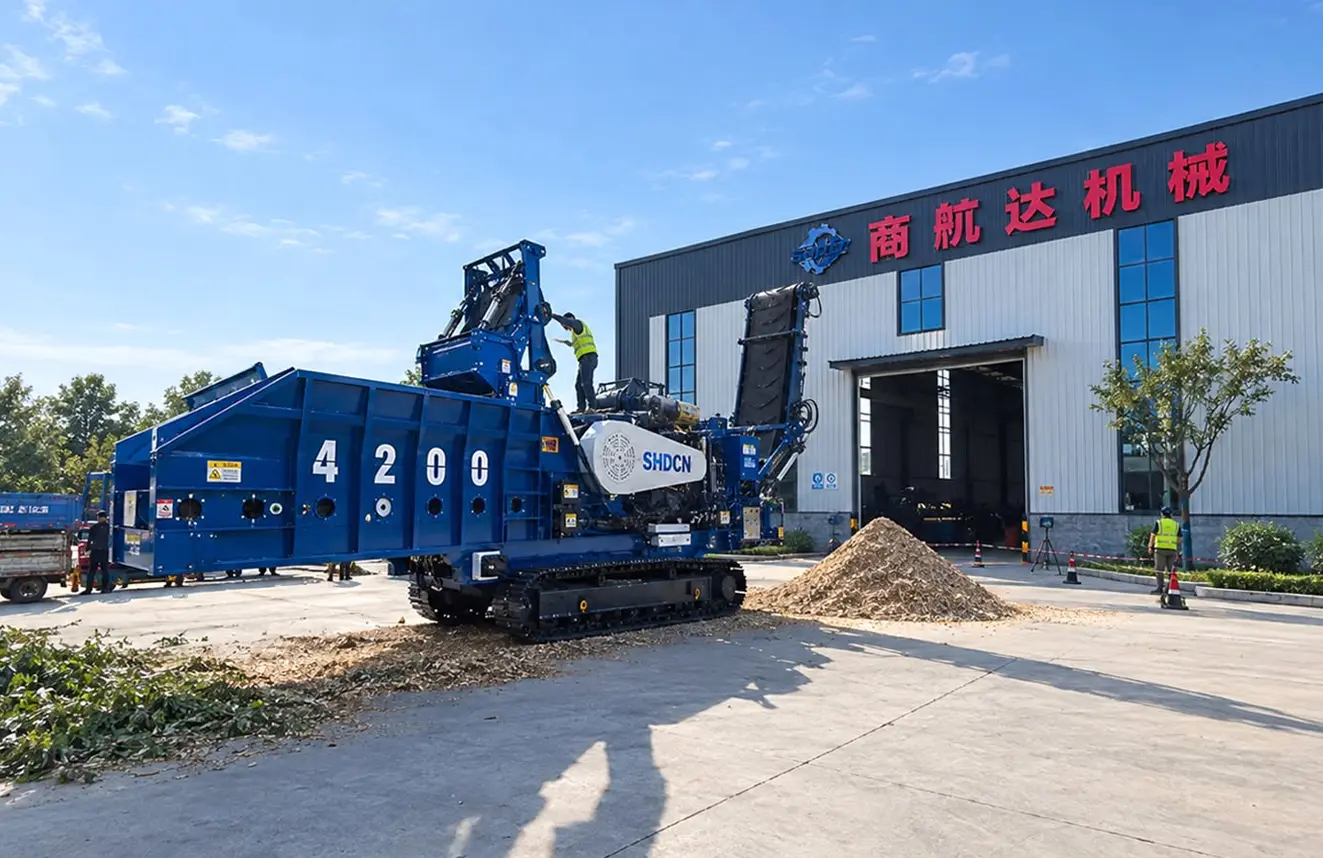
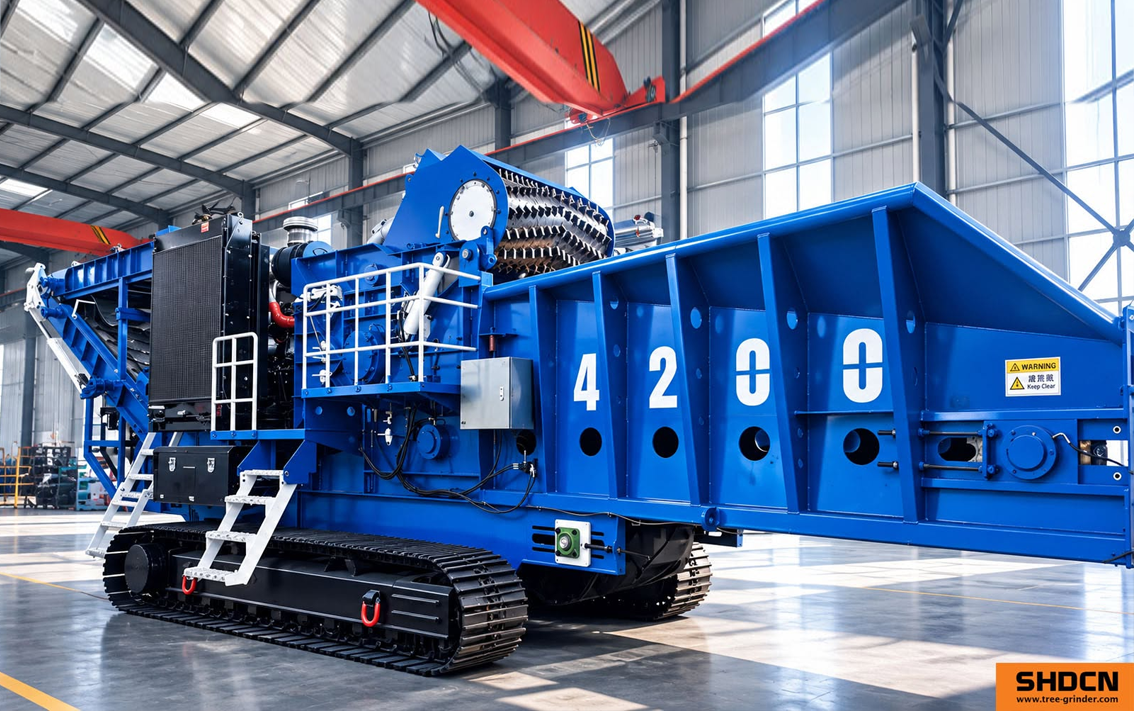
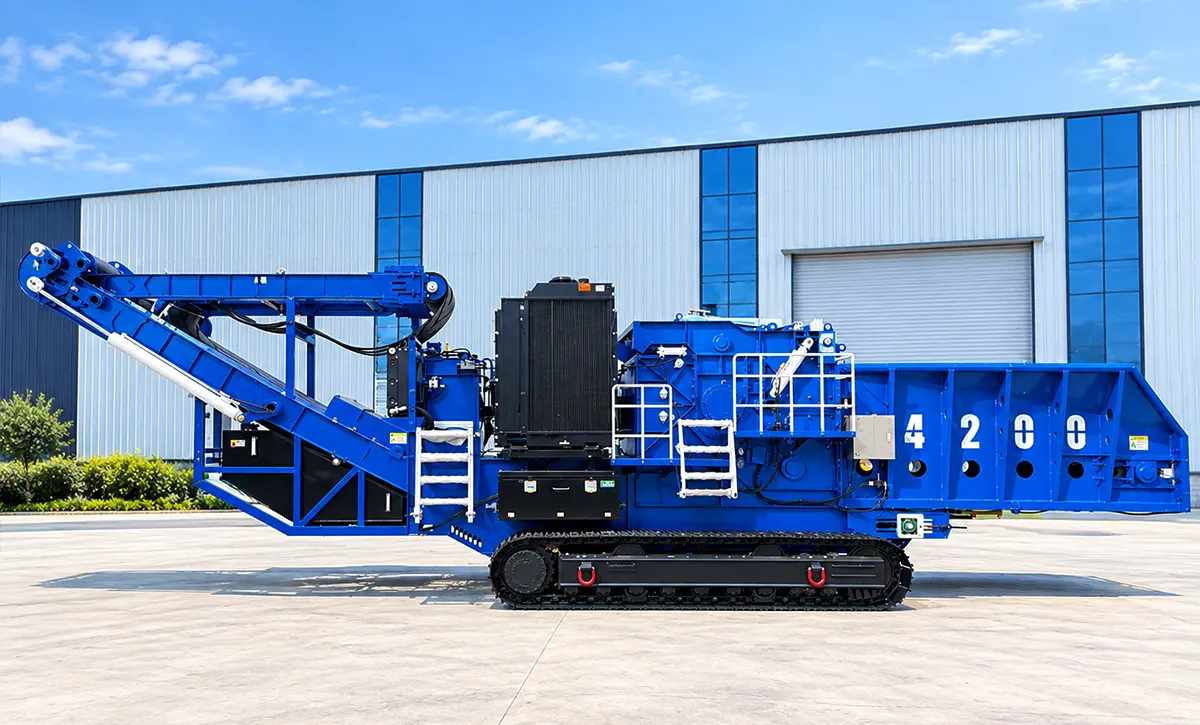
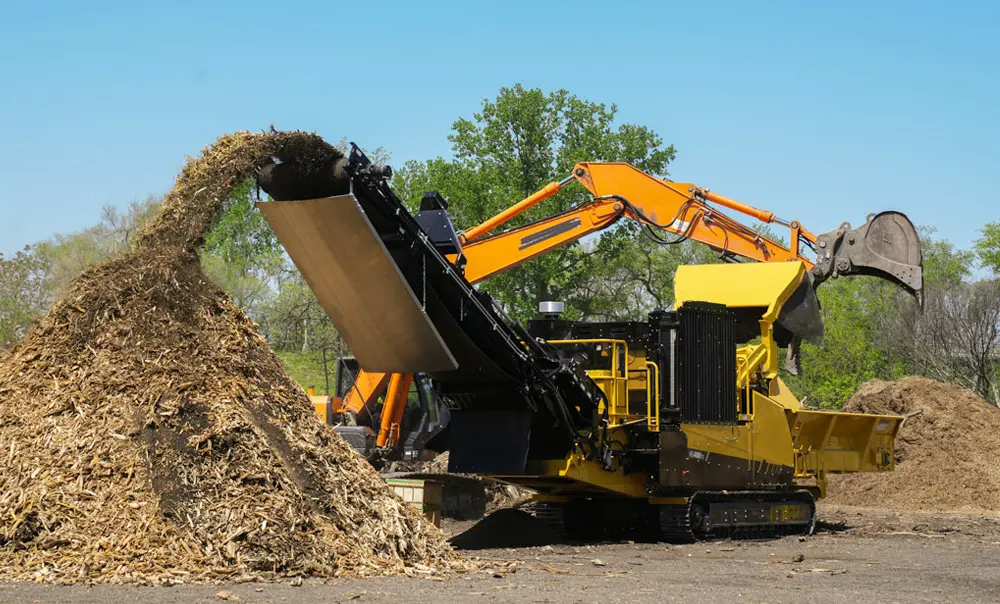
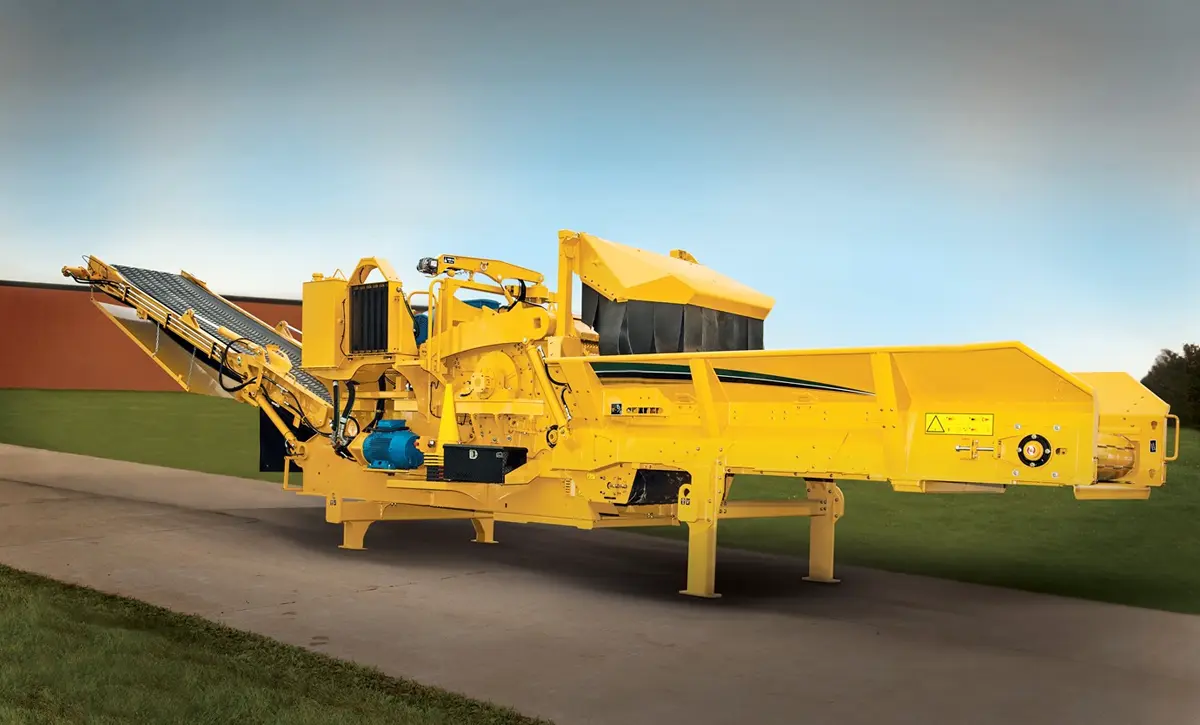
Diesel grinders dominate mobile land-clearing and jobsite work because they move with the crew and do not depend on site power. Electric horizontal grinders, by contrast, are increasingly specified where the machine runs at a fixed or semi-permanent yard with three-phase power available. The electric platform’s capacity logic is different from a diesel engine’s: it is governed by cutting envelope × feed consistency × available site power, not by engine horsepower alone.
Electric drives also change the maintenance and operating profile. They eliminate diesel fuel consumption, reduce engine-related service points, and can be configured with soft-start motors that do not require a special foundation—the machine can be rolled in, connected, and started. For operations with stable power and a defined product specification, electric grinding can lower the per-ton cost of ownership even when the capital cost is comparable.
The practical takeaway is not that one platform is universally superior. It is that the platform should be selected against site power availability, mobility requirements, and duty cycle. A contractor who moves between land-clearing sites every few weeks needs diesel mobility. A mulch yard running two shifts at a fixed location can often justify electric for the fuel and maintenance savings.
Total cost of ownership: the number that decides the purchase
Purchase price is the visible number, but it is rarely the deciding number. New horizontal grinders typically fall into three capital bands: entry-level units at roughly $75,000–$250,000, mid-size production machines at $350,000–$825,000, and production-class units at $600,000–$1.3 million. Tub grinder pricing follows a similar but slightly compressed range: $125,000–$250,000 entry, $350,000–$750,000 mid-size, and $600,000–$1 million+ for production units.
Those figures are only the beginning. Fuel is the largest operating line for diesel machines. Large horizontal grinders commonly consume 15–40 gallons per hour, and high-horsepower units can approach 50 gallons per hour. At a mid-range 25-gallon-per-hour burn rate and a conservative diesel price, fuel alone can exceed several hundred dollars per operating hour. Add wear parts—hammers, teeth, screens, belts—plus lubricants, filters, and the labor to change them, and the hourly operating cost climbs further.
Then there is downtime. A grinder that is down for a clutch replacement, a rotor repair, or a hydraulic failure is not generating revenue, and the cost of that idle time often exceeds the cost of the repair itself. High-production machines can process 240 tons per hour and generate substantial tipping-fee or product revenue per hour when running; the same machine sitting idle represents an equivalent opportunity loss.
The most useful TCO habit is to calculate cost per processed ton, not cost per hour. That requires four inputs: throughput on the actual material, fuel consumption, wear-part consumption per ton, and realistic uptime. A machine with a lower sticker price but higher fuel burn and more frequent screen changes can easily cost more per ton over a five-year horizon than a more efficient platform. Ownership costs over five years commonly exceed $100,000 beyond the initial capital outlay, depending on usage intensity.
Feeding and maintenance discipline separate average operators from low-cost producers
Two operational variables move cost per ton more than most buyers expect: how the machine is fed and how consistently it is maintained.
On feeding, the counterintuitive rule is that less can mean more. Loading a moderate, steady amount allows the grinder to process material at a productive rate; overfeeding reduces efficiency because the machine spends more time recovering from slugs than grinding. Long material should be fed trunk-end first to keep branches from spreading, and oversized pieces are often worth shearing or splitting before they enter the infeed. Keeping contamination out—especially steel and excessive dirt—protects the cutting mechanism and avoids costly impact damage.
Maintenance discipline follows a similar logic. A daily routine that covers cleaning, inspection of the cutting mechanism, belt tension, lubrication of bearings and shafts, screen condition, safety-feature testing, and engine/hydraulic checks prevents the small failures that turn into shift-killing breakdowns. The operator’s manual is the authority on intervals and specifications; the practical benchmark from field experience is that for every eight hours of grinding, roughly one hour should go to cleaning, greasing, and inspection. That ratio is not overhead—it is what protects throughput on the next shift.
Safety and emissions are part of the selection criteria, not an afterthought
Industrial grinders are high-energy machines, and the safety record of an operation is shaped before the first load is fed. Thrown-object deflectors, emergency stops, guards, and lockout/tagout procedures for maintenance are baseline requirements, not options. Operator training and strict adherence to the manual are non-negotiable; unsafe operation or maintenance can cause severe injury or death.
Emissions compliance has also become a routine specification item. Off-road diesel engines powering grinders are subject to EPA Tier 4 final standards, and machines specified for U.S. operation should be configured accordingly. Visible-emission limits and opacity rules vary by state and local air district, and portable grinding operations may require permits that specify opacity thresholds and monitoring requirements. Electric grinders avoid the diesel-emissions question entirely at the point of use, which is one reason they are increasingly attractive in air-quality-sensitive jurisdictions.
The practical selection check is straightforward: confirm that the engine or motor configuration meets the emissions regime of the jurisdiction where the machine will operate, and confirm that the safety features required by the site—deflectors, e-stops, guards—are present and functional before the machine enters production.
A decision sequence that holds up
The wood grinder machine that performs well is the one selected in the right order. Start with the material: clean and uniform points toward a horizontal grinder; mixed, oversized, or contaminated points toward a tub grinder or a primary-reduction setup. Then set the throughput target against the real material, not the brochure rating, and choose a size class within the practical bands—30–50 TPH, 70–120 TPH, or 150–200+ TPH. Then match the platform to the site: diesel for mobility and remote work, electric for fixed or semi-permanent operations with reliable three-phase power. Then run the TCO arithmetic on cost per ton, not sticker price, using fuel burn, wear-part consumption, and realistic uptime. Finally, verify safety and emissions compliance for the jurisdiction and site before committing.
A grinder is a production asset, and its value is realized in the tons it processes at a predictable cost—not in the horsepower it advertises. Buyers who work through type, capacity, platform, TCO, and compliance in that sequence end up with a machine that earns its keep shift after shift, and a cost structure that survives contact with real jobsite conditions.