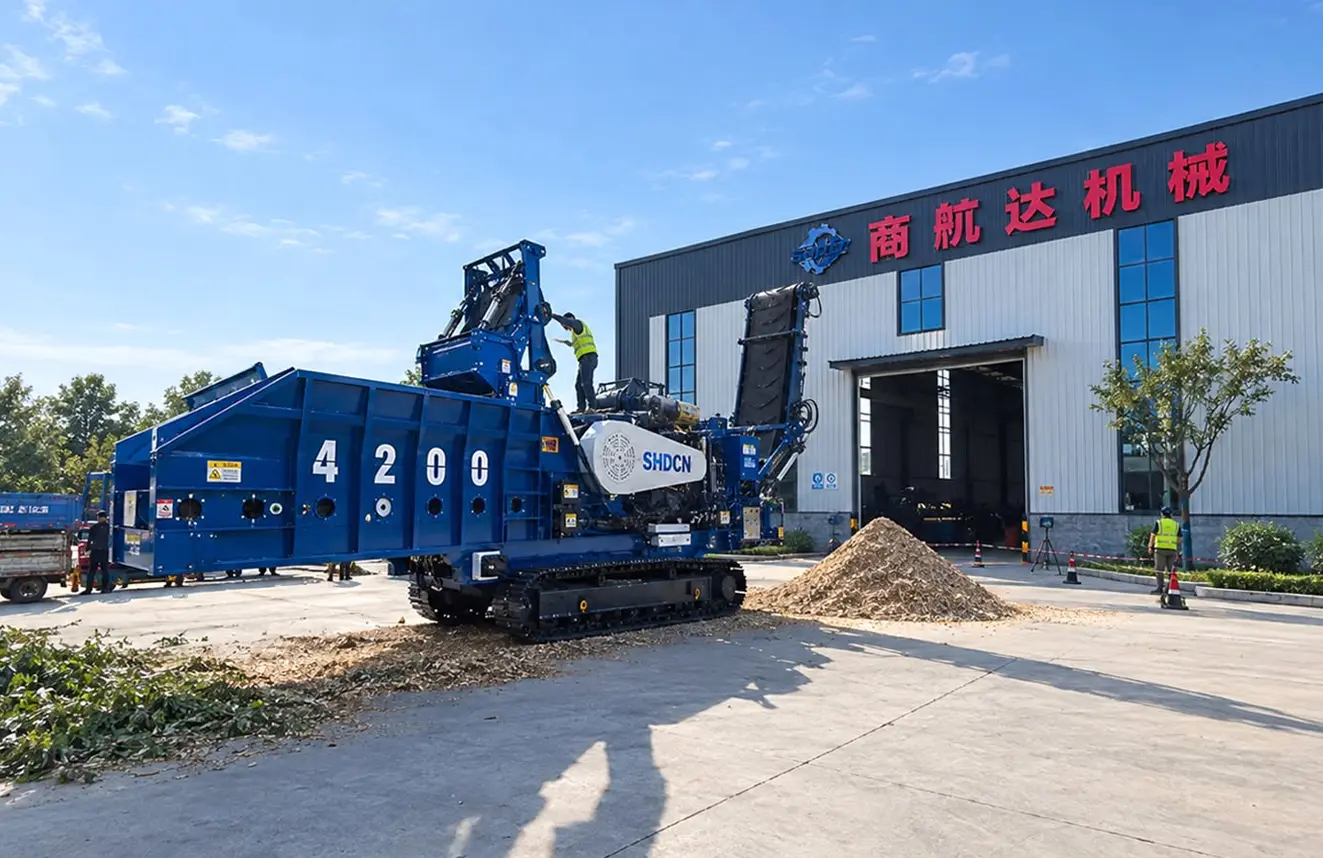
In the world of forestry management, construction site prep, and municipal waste disposal, having the right heavy duty wood chipper or tree grinder is the difference between a profitable project and a logistical nightmare.
If you are in the market for commercial land clearing equipment, you have likely encountered terms like industrial wood chipper, tree grinder, and commercial tree shredder. While often used interchangeably in casual conversation, these machines serve vastly different purposes.
This guide will break down the key differences between a wood chipper vs grinder, their most common applications, and how to choose the best forestry equipment to maximize your operational ROI.
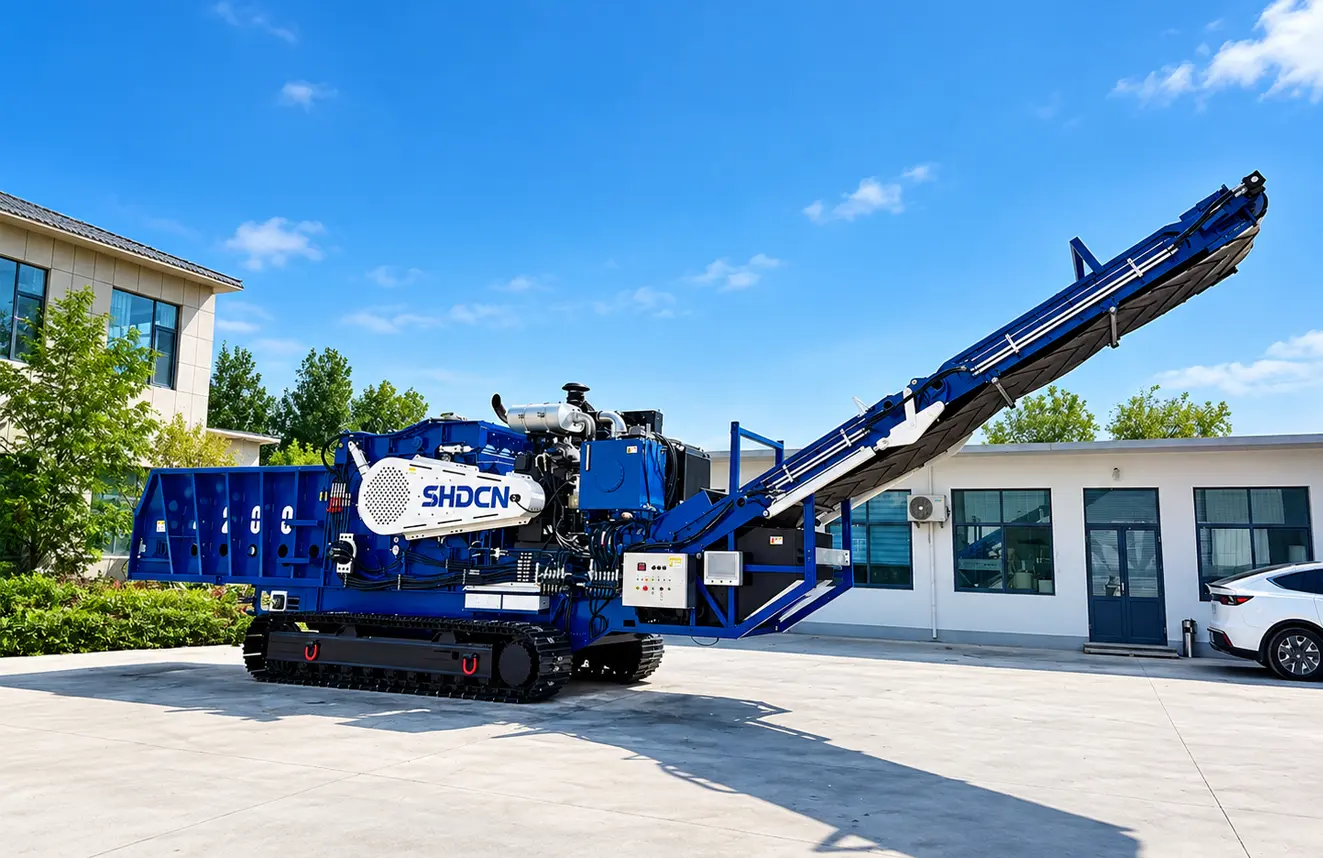
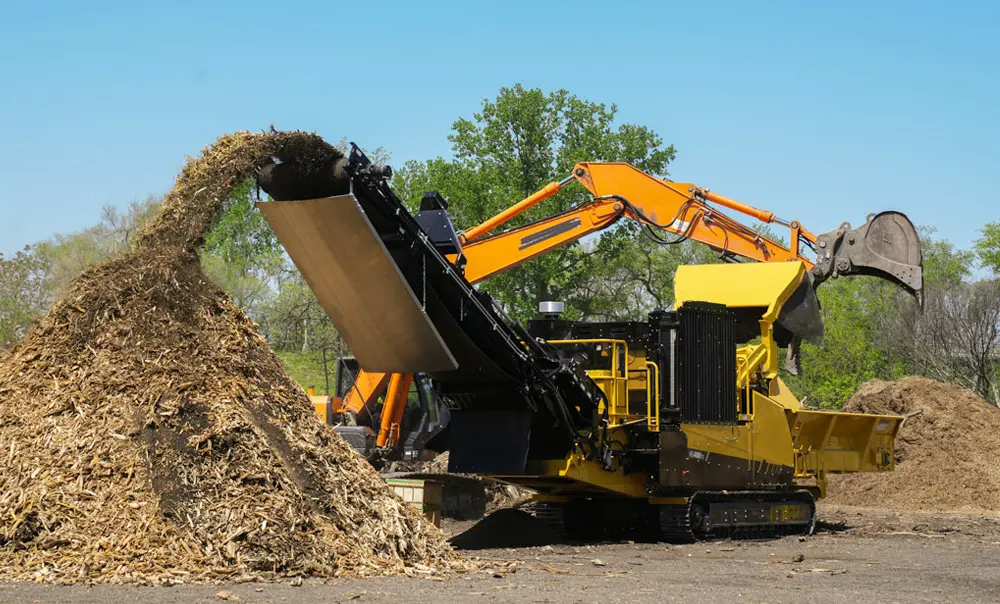
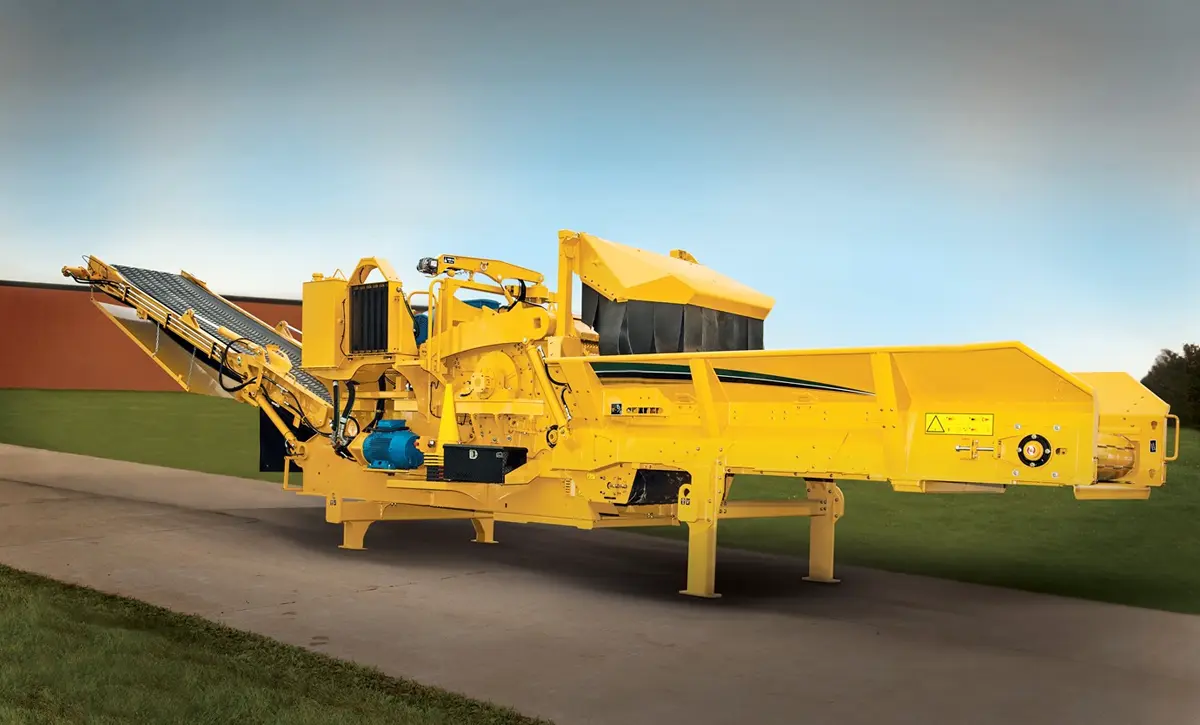
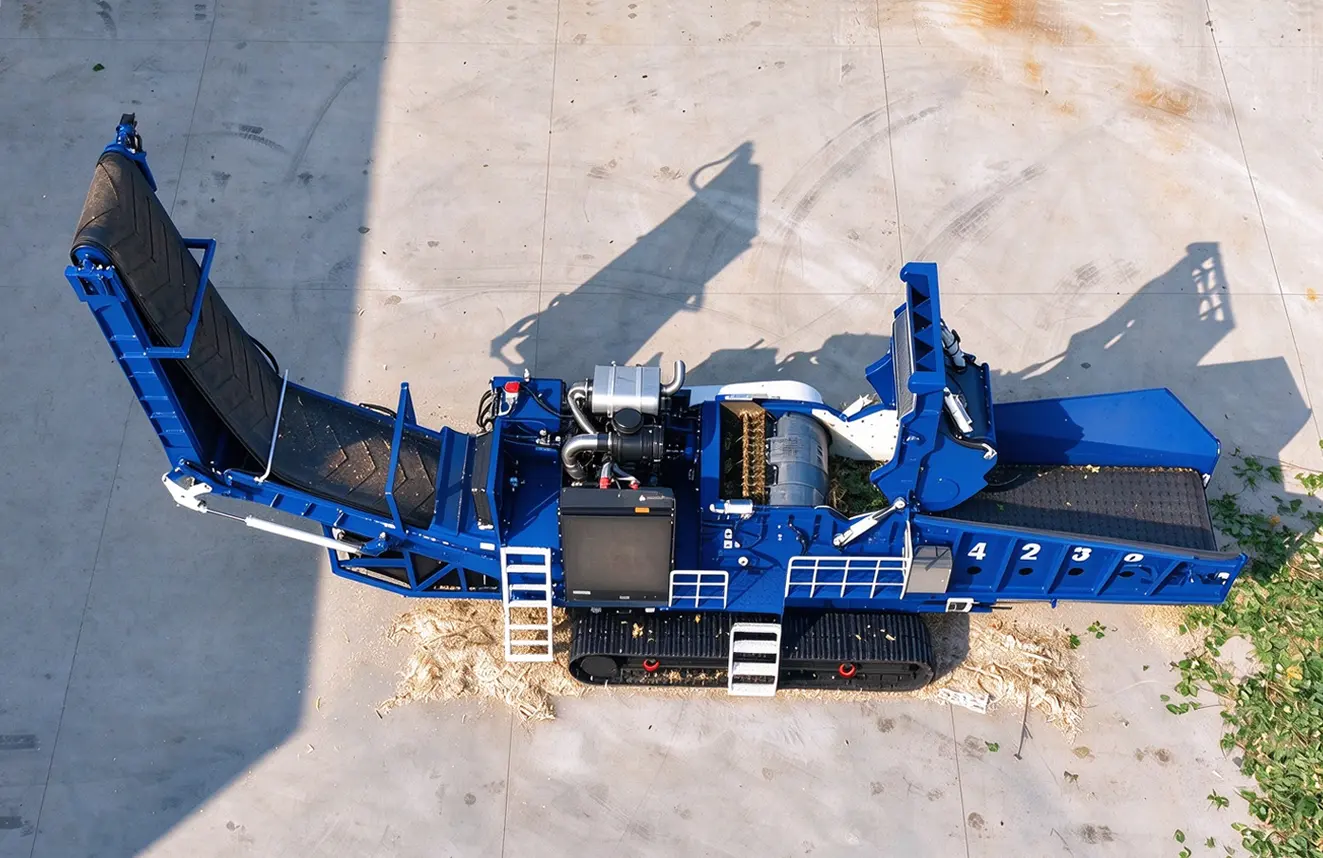
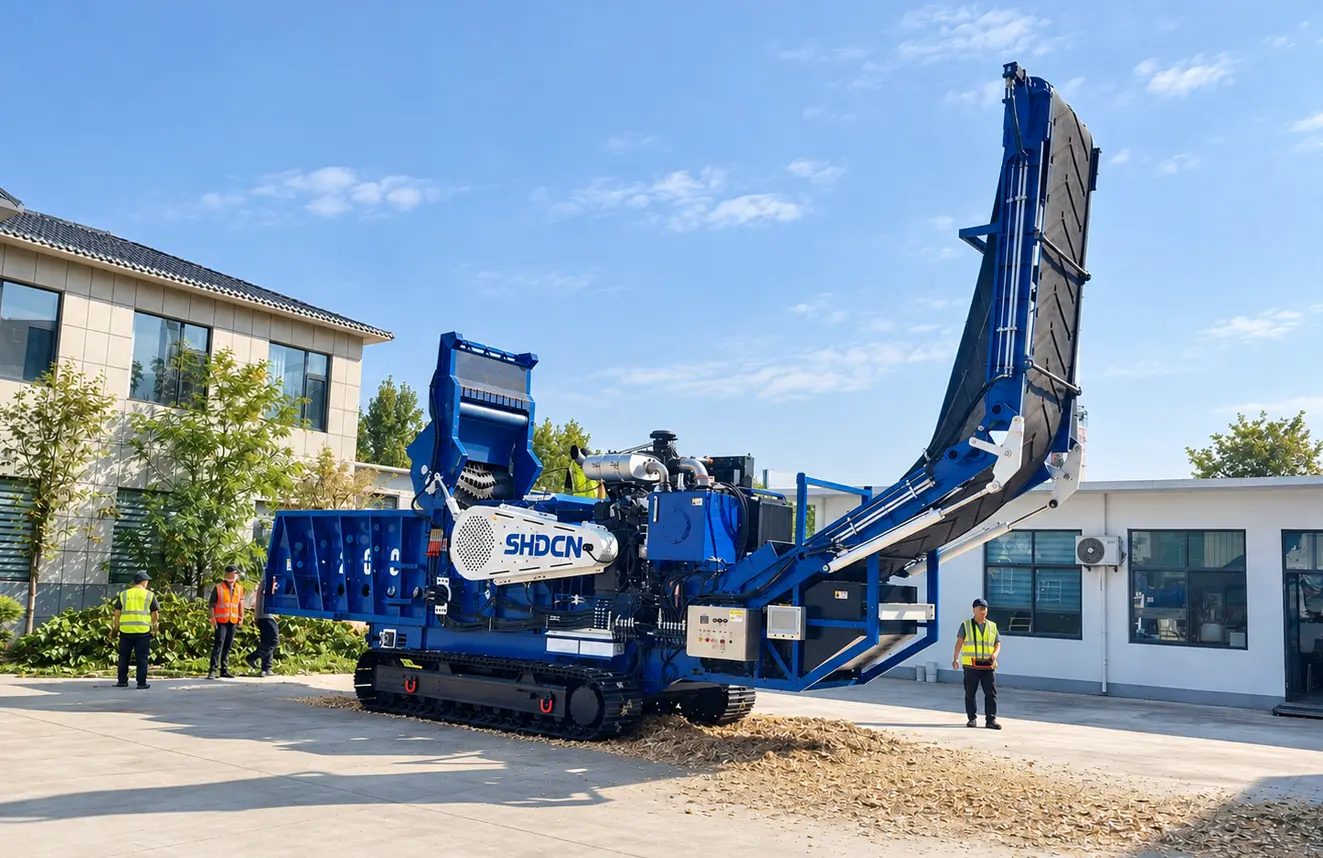
Manufactured by SHDCN, this heavy-duty diesel horizontal grinder is ready for deployment to commercial land clearing sites.
To choose the right machine, you must first understand how it processes wood.
A heavy duty wood chipper uses a disc or drum with sharp knives to slice wood into uniform, clean chips. These are ideal when the end product is intended for pulp, paper manufacturing, or decorative landscaping mulch. However, chippers are highly sensitive to contamination (dirt, rocks, and metal) and cannot easily process whole trees with extensive root systems.
Instead of slicing, an industrial wood grinder uses a massive rotating drum or hammer mill to smash and shred material. This makes them incredibly forgiving of dirt and debris.
Tub Grinders: Feature a large rotating tub that feeds material downward. Great for high-volume brush but less mobile.
Horizontal Grinders: Feed material horizontally into the grinding chamber. These are the gold standard for land clearing equipment due to their mobility, safety, and ability to process long logs and whole trees.
Shredders sit somewhere between chippers and grinders. They use flails or swinging hammers to tear material apart. They are excellent for processing green waste, leaves, and smaller brush into biomass.
The Verdict: If you need a versatile machine that can handle whole trees, root balls, and mixed construction debris on a large scale, a diesel horizontal grinder (or a heavy-duty forestry mulcher) is your best investment.
Investing in a commercial tree shredder or tree grinder opens up multiple revenue streams. Here is where these machines dominate the market:
Right-of-Way (ROW) Clearing: Maintaining power lines, pipelines, and highways requires powerful, mobile equipment. Tracked grinders can navigate uneven terrain and process felled trees on the spot.
Storm Debris Cleanup: After a hurricane or severe storm, municipalities rely on high-capacity grinders to rapidly reduce massive piles of organic waste.
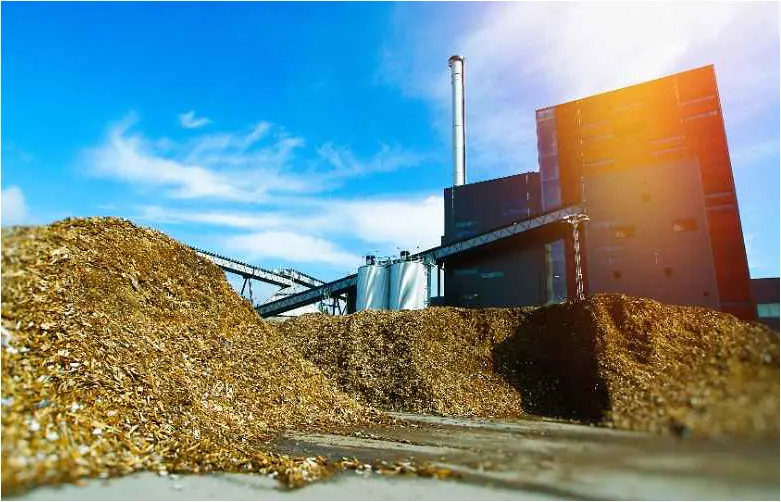
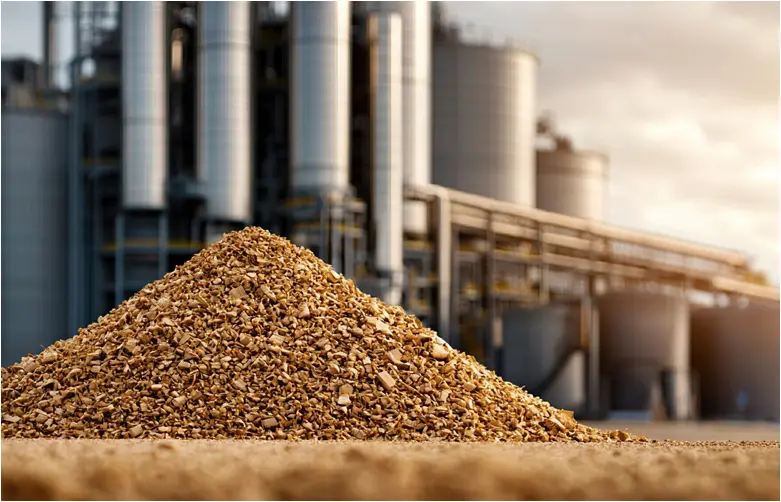
Biomass Production: With the global push for renewable energy, grinding wood waste into biomass fuel (for power plants or pellet mills) is highly profitable.
Mulch Manufacturing: By changing the screen size on a grinder, you can produce high-quality mulch for commercial landscaping and retail sale.
When evaluating commercial wood chippers or industrial grinders for sale, consider these critical factors:
Throughput Capacity: How many tons per hour (TPH) can it process? Ensure the rating matches your material type.
Engine Power: Diesel engines (like Cummins) are the industry standard for providing the massive torque required for continuous grinding.
Mobility: Tracked machines are essential for forestry and rough terrain, while wheeled units are better for highway towing.
Maintenance Access: Grinding is brutal on metal. You need a machine with easy access to the grinding chamber to minimize downtime.
At SHDCN, we engineer our HG Series Diesel Horizontal Grinders to meet the extreme demands of modern land clearing and biomass production.
Our machines are equipped with intelligent control systems and remote-control operation, allowing operators to work safely and efficiently across mountains, woodlands, and wetlands.
| Model | Engine Power | Weight | Optimal Application |
| HG 4000 | 480 HP / 353 kW | 23,500 kg | Compact jobsites & municipal green waste |
| HG 4200 | 550 HP (Cummins) | 26,500 kg | Mid-scale forestry & mulch production |
| HG 4600 | 760 HP / 567 kW | 30,500 kg | High-volume biomass & ROW clearing |
| HG 6800 | 1080 HP / 790 kW | 36,800 kg | Maximum throughput for large-scale land clearing |
Whether you are grinding logging leftovers, branches, or bark into wood chips for papermaking and biomass energy, the HG series delivers high yield and unparalleled reliability.
(Looking to process your wood waste into pellets? Explore our complete Biomass Fuel Pellet production lines.)
While diesel engines offer unmatched mobility, operations based at fixed sites—such as biomass power plants, timber processing facilities, and municipal recycling centers—can benefit significantly from electric power.
To meet this demand, SHDCN also engineers the EG Series Electric Horizontal Grinders. These machines deliver immense torque with zero emissions, significantly lower noise levels, and reduced operating costs compared to diesel models.
| Model | Motor Power | Weight | Optimal Application |
| EG 4320 | 160 kW | 12,500 kg | Small-to-mid scale fixed-site wood waste recycling |
| EG 2360 | 160 kW | 12,500 kg | Municipal green waste & secondary grinding |
| EG 2110 | 200 kW | 18,100 kg | Medium-volume timber processing & biomass prep |
| EG 4360 | 250 kW | 16,800 kg | High-volume wood processing & pallet recycling |
| EG 5320 | 315 kW | 17,200 kg | Heavy-duty biomass processing for power plants |
| EG 2113 | 450 kW | 26,500 kg | Flagship model for utility-scale industrial grinding |
Note: Transport dimensions vary by model. For example, the flagship EG 2113 measures 11,500 mm (L) × 2,650 mm (W) × 2,620 mm (H), ensuring compliance with standard heavy-haul logistics.
Whether you need to process logging leftovers or waste wood on a massive industrial scale with a stable grid connection, the EG series provides a reliable, eco-friendly alternative to traditional diesel grinders.
Q: What is the best wood chipper for commercial use?
A: For high-volume commercial use that involves dirty material, whole trees, and mixed debris, an industrial wood grinder (horizontal grinder) is far superior to a standard wood chipper. Grinders are more durable and do not require the material to be perfectly clean.
Q: What is the main difference between a commercial wood chipper and a commercial tree shredder?
A: A chipper cuts wood into neat, uniform chips using sharp blades. A shredder or grinder uses hammers to tear and crush wood into irregular pieces, which is better for biomass, composting, and processing dirty or mixed debris.
Q: Why choose a tracked horizontal grinder over a wheeled one?
A: Tracked grinders distribute weight more evenly, preventing them from getting stuck in mud or soft soil. They are essential for forestry work, wetlands, and off-road land clearing where mobility is a challenge.
Q: How do I request a quote?
A: You can visit our Diesel Horizontal Grinder page to view detailed specifications, or contact our engineering team directly to discuss a configuration that matches your project’s throughput requirements.
This guide was provided by the engineering team at SHDCN. For more information on our heavy-duty land clearing equipment, visit https://www.tree-grinder.com/.
Page Name : https://www.facebook.com/shdcn
Email: [email protected]
WhatsApp: +86-15315577225